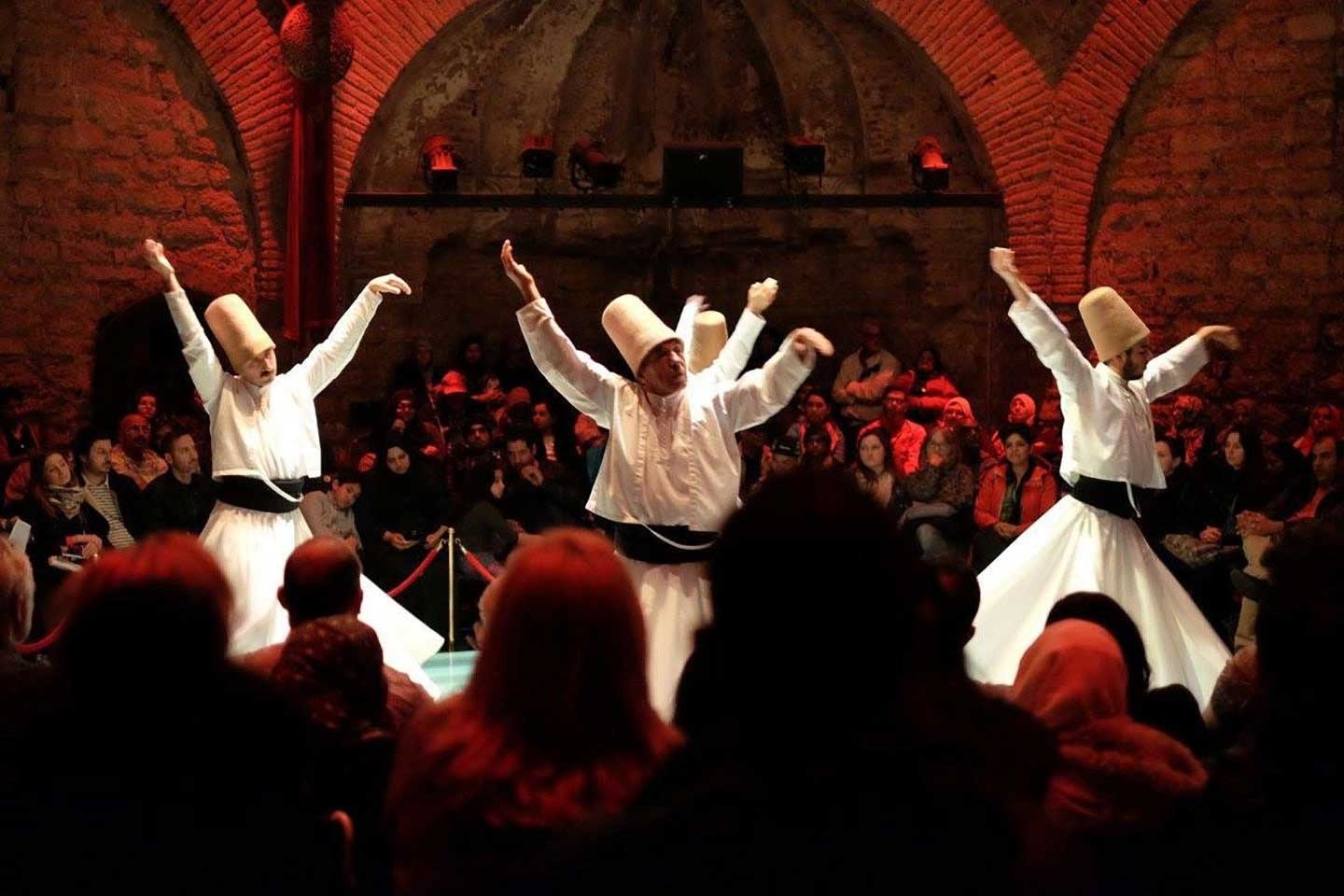
The Blue Glass That Watches Back: Turkey's Evil Eye Tradition and the Ancient Logic of Protection
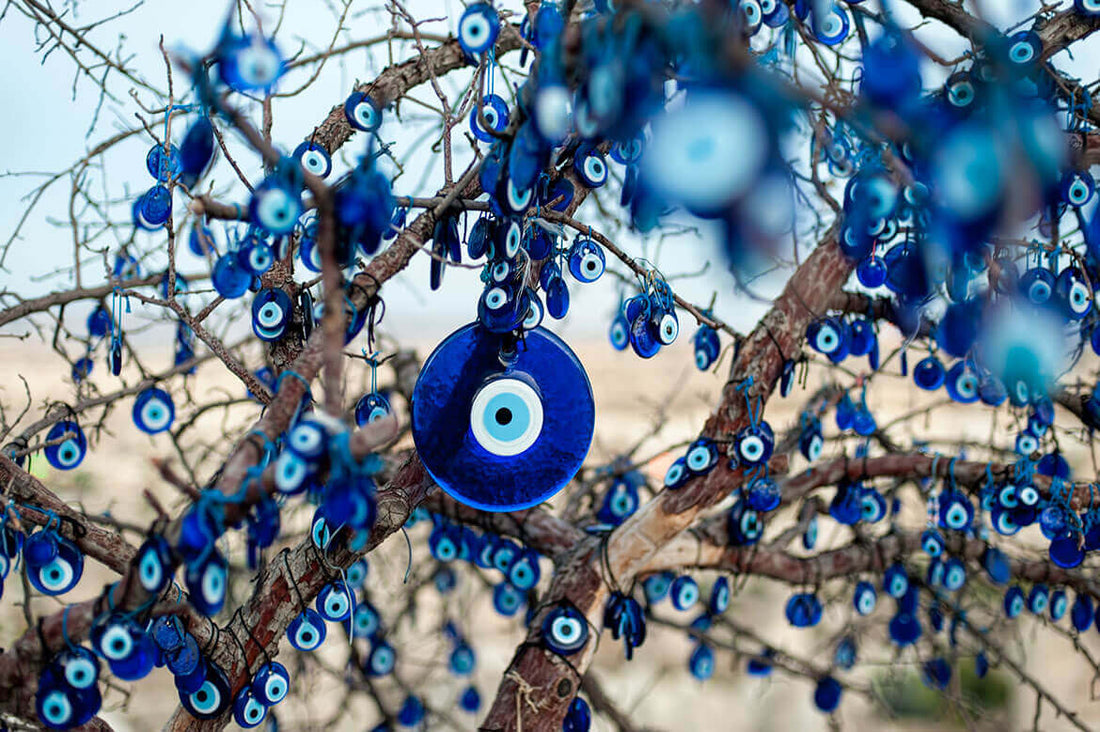
The Blue Glass That Watches Back: Turkey's Evil Eye Tradition and the Ancient Logic of Protection
There is a specific moment — well-documented in Turkish social life and recognizable to anyone who has spent time there — when a compliment produces anxiety rather than pleasure. A Turkish mother who receives an admiring comment about her baby from a stranger will often respond not with simple thanks but with a counter-ritual: a slight pulling-back of the child, a murmured phrase (*maşallah* — "what God has willed"), perhaps a touch to the blue glass amulet pinned at the child's shoulder. The admirer's gaze, however well-intentioned, has introduced a potential hazard that the mother's response is designed to neutralize. The hazard has a name: *nazar*.
Nazar is the Turkish term for the evil eye — the belief, common across the Mediterranean, Middle East, North Africa, South Asia, and many other regions of the world, that an intense gaze carrying strong emotion (envy, admiration, desire, malice) can cause harm to its object. The harm may be physical (illness, accident, the sudden wilting of a healthy plant, the souring of fresh milk), psychological (inexplicable sadness, loss of motivation, run of bad luck), or social (the collapse of a previously successful enterprise, the sudden deterioration of a good relationship). In the Turkish cultural framework, nazar is not metaphor. It is a causal mechanism — a form of transmission by which harmful energy moves through the medium of a gaze from a person who feels intense emotion to the object of that gaze, producing real-world consequences that protective measures can prevent or limit.
The primary protective measure — the **nazar boncuğu**, the blue glass eye amulet that has become one of Turkey's most internationally recognized cultural exports — is simultaneously a piece of glass technology, a psychological instrument, and a statement about a theory of interpersonal harm that is at least five thousand years old and that the modern world has partially validated without fully acknowledging.
The Archaeology of the Gaze: A Belief Older Than Most Religions
The evil eye belief is among the most geographically widespread and historically deep supernaturalistic beliefs in human culture. Its earliest documented appearances are in ancient Mesopotamia — Sumerian texts from approximately 3000 BCE reference the evil eye as a recognized harmful force — and the belief is attested in ancient Egypt, in classical Greece (where it was called *baskania*), in ancient Rome (*fascinum*), in the Hebrew Bible (*ayin hara*), and in the earliest Islamic texts (the Prophet Muhammad's hadiths contain specific references to the evil eye as a real phenomenon and prescribe specific protective measures against it).
The geographic distribution of the evil eye belief is so wide that anthropologists have long debated whether it diffused from a single point of cultural origin or arose independently in multiple cultures. The latter explanation — convergent cultural evolution — is supported by the belief's appearance in cultures with no plausible historical contact: the evil eye concept appears in indigenous traditions in sub-Saharan Africa, in pre-Columbian Mesoamerica, and in various South Asian cultures whose development was substantially independent. The convergence suggests that the belief is not a cultural accident but a response to something in human social psychology that multiple cultures independently identified and tried to address.
That something is envy. The evil eye belief is, at its social-psychological core, a theory about the harmful effects of being envied — about the specific vulnerability that comes with visible success, visible beauty, visible happiness, or visible good fortune in a social environment where not everyone shares those conditions. The person who is envied is the person at risk from nazar; the person who envies is, sometimes knowingly and sometimes unknowingly, the source of the harmful gaze. The belief functions as a cultural encoding of the real social insight that publicly displayed good fortune creates social friction and sometimes produces hostile responses that can have real consequences for the fortunate person.
The Turkish tradition inherited the evil eye belief through multiple overlapping channels: the ancient Anatolian cultures that preceded and were absorbed by the Ottoman Empire, the Greek and Roman Mediterranean tradition that the Byzantine Empire transmitted to its Anatolian territories, and the Islamic theological tradition that recognized the evil eye as a real phenomenon addressed in Quranic verses (specifically Al-Falaq and Al-Nas, the two protective suras at the end of the Quran, which are partly understood as protections against the evil eye) and in prophetic hadith. The nazar belief in Turkey is therefore not a single tradition but a convergence of multiple independent ancient traditions, all pointing in the same direction.
The Nazar Boncuğu: Five Thousand Years of Glass Technology
The **nazar boncuğu** — literally "nazar bead" — is the material technology through which the evil eye belief is most practically addressed in Turkey, and its production is itself one of the world's most ancient continuous craft traditions. The earliest glass evil eye amulets have been found in Anatolia and the broader Mediterranean region dating to approximately 1500 BCE, making glass eye amulet production a technology that has been continuous, in approximately the same geographic region, for three and a half millennia.
The amulet's design encodes its protective theory: the blue glass eye shape is understood to function as a reflector — a surface that catches and returns the malevolent gaze before it can reach its intended target. The eye looks back at the eye that looks at it. The color blue (*mavi*) is specifically associated with protective power in Turkish and broader Mediterranean folk belief, related to the traditional association of blue eyes with unusual power in cultures where dark eyes are the norm — a stranger with light blue eyes was historically regarded with particular wariness in many Middle Eastern and Mediterranean communities, and the blue of the amulet may encode this ancestral recognition of the gaze as a force with a specific chromatic signature.
The traditional production of nazar boncuğu is centered in the Turkish village of **Görece**, near İzmir on the Aegean coast, where glassblowers have been producing the amulets in their distinctive layered form — white core, dark blue outer layer, light blue middle layer, with the black "pupil" of the eye produced by a specific rod technique that concentrates color at the center — for several generations. The production method involves the manipulation of molten glass rods at extremely high temperatures, a craft that requires years of apprenticeship to develop and that produces the specific color layering that cheaper mass-produced imitations in plastic or painted ceramic cannot replicate.
The authentic nazar boncuğu's durability is understood within the protective belief system as a functional feature: the amulet that cracks or shatters has absorbed a particularly intense nazar, protecting its owner from the full force of the evil eye by breaking itself. A cracked nazar boncuğu is therefore not a damaged object to be discarded but evidence that the protection worked — the amulet fulfilled its purpose and should be replaced with gratitude rather than disappointment. This belief creates a functional market for replacement amulets that has sustained the glass-blowing tradition for centuries: the more seriously the protective belief is maintained, the more frequently amulets need replacing, the more continuously the craft tradition is economically supported.
Maşallah: The Verbal Protection System
The nazar boncuğu is the material component of a broader protective system that includes verbal and behavioral elements operating in everyday Turkish social interaction. The most important verbal protection against nazar is **maşallah** — an Arabic phrase meaning roughly "what God has willed" — which is specifically deployed in Turkish (and across the Arabic-speaking world and other Muslim cultures) when acknowledging something beautiful, successful, or fortunate.
The function of *maşallah* in the protective system is to redirect the act of admiration through divine reference, attributing the beautiful or fortunate thing to God's will rather than to the subject's personal merit or good fortune. This redirection serves two protective purposes: it neutralizes the envy that excessive admiration might generate in the observer (by framing the admirable quality as divinely given rather than personally earned, it reduces the social inequity that generates envy), and it invokes divine protection over the admirable thing at the moment of its being seen (the utterance is understood as a form of blessing that seals the moment against malicious or envious force).
The Turkish social convention around maşallah is specific: saying it when admiring another person's child, home, business success, or personal achievement is not optional polite courtesy but a genuine social obligation in Turkish cultural terms. The person who admires enthusiastically without saying maşallah is, in Turkish folk belief, either ignorant of the proper protective protocol or potentially malicious in their admiration — their failure to offer the protective utterance leaves the admired thing exposed to whatever force their emotion carries. A Turkish parent whose friend admires the new baby without saying maşallah will notice the omission, feel the anxiety of exposure, and may quietly say the phrase themselves to compensate.
Additional verbal and behavioral protections include: knocking on wood (*tahtaya vur*) when discussing good fortune, to prevent the naming of good fortune from attracting the eye; avoiding direct numerical statements about wealth or success (a Turkish businessman may avoid specifying exact revenue figures even in private, or may understate them significantly); and the practice of praising something with deliberate understatement to avoid triggering the envy that enthusiastic praise might generate.
Who Can Give Nazar: A Social Theory of the Gaze
The Turkish tradition is nuanced about who poses the greatest risk of nazar — a nuance that reflects a sophisticated social psychology embedded in folk belief. The most dangerous sources of nazar are not malicious people intending harm but people who feel intense positive emotion, particularly admiration and desire, combined with an underlying envy they may not consciously acknowledge.
**People with light-colored eyes** — blue or green — are traditionally understood to pose elevated nazar risk in the Turkish and broader Mediterranean tradition, because their gaze is understood to carry an unusual intensity. This belief, which appears to be ancient enough to predate modern optics, may reflect a cultural recognition that unusual appearance attracts unusual attention, and that unusual attention from someone of unusual appearance carries a concentration of social energy that the ordinary protective mechanisms may not fully neutralize. The nazar boncuğu's blue color may be specifically designed to meet the blue-eyed gaze with equal visual force.
**People in states of intense admiration** — particularly those whose admiration is tinged with longing for what they cannot have — are understood to pose the most serious nazar risk even when their conscious intentions are entirely benevolent. The Turkish folk psychology of the evil eye recognizes that emotional states are not fully under conscious control, and that a person who genuinely wishes the admired thing well may simultaneously feel a degree of envy that their goodwill does not eliminate. The harmful effect comes not from conscious malice but from the involuntary emission of complex emotional energy — a concept that has structural similarities to modern psychological accounts of ambivalent emotion and unconscious hostility.
**Strangers and people from outside the community** pose elevated nazar risk by default, because their emotional states and intentions are unknown and their capacity for envy is unpredictable. The protective measures applied to interactions with strangers — the particular care with which Turkish families protect babies and young children from unknown admirers, the extra layer of verbal protection deployed when accepting compliments from people one does not know well — reflect the fundamental social-psychological logic of the evil eye belief: visible good fortune is safe within a community of mutual goodwill, but exposure to unknown emotional states creates vulnerability that material and verbal protection must address.
The Specialists: Nazar Diagnoses and Rituals of Removal
When the protective measures have failed — when someone is believed to have received nazar that the amulets and verbal precautions did not prevent — the Turkish tradition provides a diagnosis system and a set of remediation rituals that vary regionally but share common structural features.
**Symptoms of received nazar** are consistent across Turkish folk accounts: sudden unexplained illness (particularly headache and fever), unusual fatigue or depression without apparent cause, a run of misfortune or accidents, the sudden failure of a previously successful enterprise, or the inexplicable decline of a healthy plant or animal. The symptom set is, notably, nonspecific — these are things that happen to everyone, regularly — which means that the diagnosis of nazar is applied to misfortune whose cause is genuinely unexplained and whose resolution through ordinary means has not been forthcoming.
The most common diagnosis method is the **lead-pouring ritual** (*kurşun dökmek*) — performed by a specialist (usually an older woman with recognized skill in the practice) who melts a piece of lead and pours the molten metal into a bowl of cold water held above the affected person's head. The shapes formed by the solidifying lead are read for information about the source of the nazar: specific shapes indicate whether the nazar came from a man or woman, a friend or stranger, a person of known or unknown identity. The ritual itself is understood to be curative as well as diagnostic — the lead-pouring draws the nazar out of the affected person and into the cooling metal, where it solidifies and can be discarded.
The **charcoal and salt ritual** — placing charcoal and salt at the threshold of a home believed to have received nazar, or burning salt while reciting protective prayers — is another common remediation practice, as is the **egg ritual** in which an egg is passed over the affected person's body and then broken to reveal the condition of the yolk, which is read for evidence of nazar absorption. These rituals are performed not by clergy (though Islamic prayer may be incorporated) but by lay specialists — typically older women whose reputation for effectiveness in nazar removal is community-established and whose skills are in demand particularly when a child or young person is affected.
The Quranic protective verses — particularly the **Ayat al-Kursi** (Throne Verse) and the **Muawwithat** (the last two suras) — are recited as protection against nazar in devoutly Muslim Turkish households, creating an integration of Islamic theological framework and pre-Islamic folk protective practice that mirrors the broader pattern of Turkish religious culture's accommodation of pre-Islamic Anatolian traditions within Islamic formal practice.
The Blue Glass Economy: From Village Craft to Global Souvenir
The nazar boncuğu's transition from protective amulet to global souvenir represents one of the more interesting case studies in the commodification of folk belief. The amulet's visual distinctiveness — the nested blue circles of the glass eye are immediately recognizable and aesthetically compelling even to people with no knowledge of its protective function — and its small, portable, and affordable character made it an ideal souvenir product, and the Turkish tourism industry's growth from the 1960s onward created demand that the traditional Görece glassblowers could not alone satisfy.
The result has been a bifurcation of the nazar boncuğu market: on one side, the traditional glass production of Görece and similar Aegean glassblowing communities, producing amulets through the traditional layered-glass method in sizes ranging from small pendants to elaborate wall pieces; on the other side, a mass-market production in China, India, and other manufacturing centers of plastic, ceramic, and poorly-made glass imitations that reproduce the visual form without the glass technology or the craft tradition. The price difference between the two is significant — a genuine hand-blown Görece nazar may cost ten to twenty times as much as a mass-produced import — and distinguishing the two requires either expertise or careful examination of the glass's internal structure.
Within Turkey, the nazar boncuğu remains a genuine protective object rather than primarily a decorative one. Turkish homes typically have multiple nazar boncuğu at strategic locations: hanging at the entrance doorway (to catch nazar before it enters the home), displayed in the kitchen (to protect food preparation and family meals), attached to the car (to protect against road accidents whose cause might be nazar), and pinned to infants' clothing (the most vulnerable members of the household receiving the most thorough material protection). The frequency with which amulets crack or shatter — requiring replacement — generates steady demand for new amulets from local producers, sustaining the glassblowing tradition through domestic religious and protective practice rather than primarily through tourism.
The Evil Eye Across Cultures: Why the Belief Persists
The evil eye belief's global distribution has attracted attention from anthropologists, psychologists, and evolutionary biologists attempting to explain why so many independent cultures converged on such a similar explanation for a similar type of misfortune. The explanations proposed fall into several categories, each illuminating a different dimension of what the belief encodes.
The **social regulation theory** proposes that the evil eye belief functions as a mechanism for managing the social friction generated by visible inequality. In any community where some mem