What Icelanders Actually Believe About Elves — And What That Tells Us About Knowing
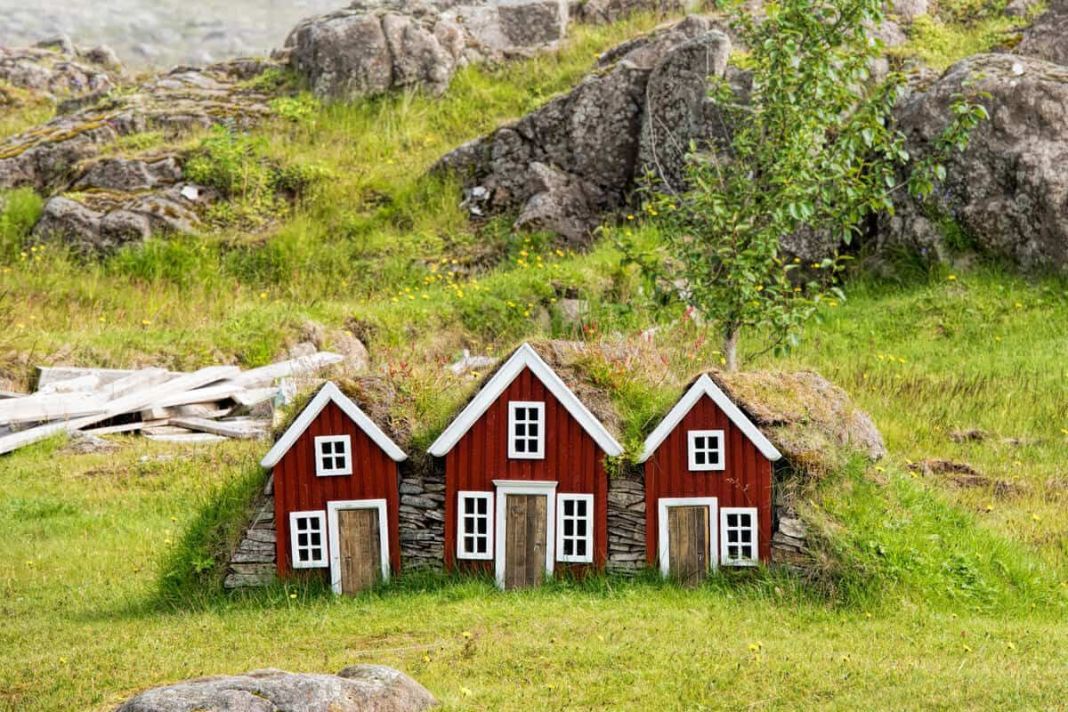
What Icelanders Actually Believe About Elves — And What That Tells Us About Knowing
In 2004, construction on a highway bypass near Reykjavik was halted after a group of Icelandic elf-believers petitioned that the road would disturb the habitat of the **huldufólk** — the hidden people, the elves — who were understood to inhabit a particular large lava rock on the proposed construction site. The rock was eventually relocated rather than destroyed, the road was adjusted, and the project proceeded. In 2013, construction on a road in the Gálgahraun lava field outside Reykjavik was halted for months while discussions continued about whether the project would disturb elf habitat. An elf advocate hired by the construction opponents consulted with the hidden people and reported that the elves had requested a specific relocation of the road. The construction eventually proceeded, but the episode attracted international media attention and produced the particular combination of bemused outside commentary and defensive Icelandic insistence on being taken seriously that characterizes Iceland's relationship with the outside world on this subject.
These are not isolated incidents or folk survivals maintained by a handful of rural traditionalists. Iceland's relationship to the huldufólk is a nationally distributed cultural phenomenon that persists across educational levels, across generational cohorts, across urban and rural demographics, and across the political spectrum of a country that is simultaneously one of the world's highest-performing in literacy, university education, gender equality, technological adoption, and almost any other metric of modern rationalist achievement. The country that topped the Global Gender Gap Index and produces more books per capita than any other nation on earth also, according to multiple surveys conducted over several decades, has a majority population that declines to rule out the existence of elves.
The question worth asking is not the one that international media typically asks ("Do Icelanders really believe in elves?"), which frames the tradition as an anomaly requiring explanation or debunking. The more interesting question is: what does it mean to believe, and what kind of knowing does the Icelandic relationship to the huldufólk represent, that makes it compatible with — rather than contradicted by — the same society's sophisticated scientific and technological modernity?
The Huldufólk: A Taxonomy of the Invisible
The huldufólk — "hidden people" in Icelandic — are not the diminutive fairy-tale elves of Northern European folklore tradition. They are, in the Icelandic conception, a parallel race of beings similar in appearance and social organization to humans, inhabiting the same landscape as humans but in a dimension of it that is normally invisible to ordinary human perception. They live in rocks, in hillsides, in specific lava formations that have particular visual or energetic qualities, and in the distinctive landscape features of a volcanic island whose geological character produces a density of striking rock formations that has no equivalent in most other human environments.
The huldufólk have social structures — families, communities, farms, churches — that mirror human social organization. They are subject to the same seasonal rhythms as humans and are particularly active at the same transitional moments of the year (Christmas, Midsummer, the New Year) that have traditionally been understood across northern European cultures as times when the boundaries between the visible and invisible worlds are more permeable. They can be encountered by humans who have the perceptual capacity to perceive them — a capacity distributed unevenly among the human population, with some people having significantly greater sensitivity to the hidden folk's presence than others.
The distinction between huldufólk (hidden people) and **álvar** (elves, the more common English translation but actually a slightly different category in Icelandic folk taxonomy) is one that Icelanders maintain but that English-language reporting consistently collapses. The álvar in Icelandic tradition are associated with natural forces and landscape features in ways that somewhat overlap with the huldufólk concept but are theologically and phenomenologically distinct. Both belong to the broader category of **óvættur** (supernatural beings) that populate the Icelandic folk cosmological landscape, which also includes **tröll** (trolls), **draugar** (revenants), **náttúruvættur** (nature spirits), and the **landvættir** (land spirits) that are among the oldest attested categories of Icelandic supernatural belief, appearing in the medieval sagas.
The medieval Icelandic sagas — the extraordinary body of prose literature produced in Iceland between the twelfth and fourteenth centuries, recording the events of the settlement era (870–930 CE) and the subsequent Viking Age — contain numerous references to the landvættir and to encounters with huldufólk-like beings that establish these beliefs as continuous with Iceland's earliest documented cultural history. The saga tradition's matter-of-fact treatment of supernatural encounters — integrated into historical narrative without the medieval European distinction between secular history and theological miracle — reflects a pre-Christian Norse cosmological framework in which the visible and invisible dimensions of the world were understood as co-present and frequently interacting rather than separated by an ontological barrier.
The Landscape That Made the Beliefs
Iceland's landscape is not a neutral backdrop to its elf tradition. It is the tradition's primary generator and continuous reinforcement. A country formed by volcanic activity over millions of years — a country where new lava fields are created within living memory, where geothermal steam rises from the ground in hundreds of locations, where the earth literally opens and moves in ways that the inhabitants can witness — is not a country whose landscape resembles the stable, legible, humanly managed environments in which most European folk traditions developed.
The **lava fields** (*hraun*) that cover much of Iceland are among the most visually and phenomenologically striking landscapes on earth. Recent lava (geologically recent — within the past few thousand years) has a surface texture of extraordinary roughness and irregularity, its formations including tortured shapes that the human visual system consistently interprets as figures: partial faces, hunched forms, reaching hands, seated bodies. The pareidolia — the perceptual tendency to find human or animal shapes in random visual information — that the lava field's surface produces is intense and consistent. Walking through an Icelandic lava field at dusk, when the horizontal light catches the rough surface at angles that intensify the shadows within the formations, produces an experience of being surrounded by ambiguously animate forms that is genuine regardless of one's theoretical commitments about what those forms actually are.
The Icelandic landscape also contains a specific geological feature particularly associated with huldufólk habitation: the **elfin rock** (*álfaborg* or *huldufólkshóll*), typically a distinctive volcanic rock formation of unusual size, shape, or visual character that stands out in the surrounding landscape and that folk tradition identifies as inhabited or owned by the hidden people. These rocks are not arbitrary markers of belief; they are visually distinctive in ways that attract attention and that the folk tradition's framework of hidden inhabitance provides a culturally available explanation for. The rock that the 2004 Reykjavik highway construction was adjusted to avoid was not a randomly selected stone; it was a specific formation of unusual character whose visual distinctiveness had made it a focus of local attention for long enough that the attention had organized itself into a specific belief about its inhabitants.
The Survey Question and What It Actually Measures
The Icelandic elf surveys — several of which have been conducted by researchers at the University of Iceland and other institutions over the past three decades — produce results that consistently puzzle outside commentators: a substantial minority of respondents (typically 20 to 30%) say they believe in the existence of elves, while a much larger proportion (often more than 50%, and in some surveys more than 80%) decline to say that elves definitely do not exist. The "neither confirm nor deny" category is consistently larger than either the believer or the nonbeliever category.
What this distribution measures is not helpfully captured by the frame of "do Icelanders believe in elves" in the binary sense that the question implies. The "refuse to deny" response is not fence-sitting or intellectual confusion. It is a specific epistemological position: the position that the absence of personal evidence for the existence of elves does not constitute sufficient grounds for confident denial of their existence, particularly in a landscape and cultural context where such denial has been consistently challenged by reports of encounter from credible witnesses.
This is, notably, the same epistemological position that a rigorous empiricist should take about any class of phenomena for which they have no direct evidence but for which multiple credible witnesses claim experience: the correct response is agnosticism, not confident denial. The Icelandic "refuse to deny" position is epistemically defensible in a way that the confident denial it declines is not — confident denial requires confidence in the completeness of one's knowledge, which is exactly what epistemological rigor argues against.
The philosopher who has spent the most sustained time analyzing the Icelandic elf surveys and their implications is Terry Gunnell of the University of Iceland's Folkloristics department, whose research frames the Icelandic relationship to the huldufólk not as belief in the supernatural in the naive sense but as a culturally specific form of what he calls "openness" — a refusal to close the doors of perception to categories of experience that the dominant scientific worldview does not have well-developed frameworks for processing. This openness is not, Gunnell argues, intellectually regressive. It is a form of intellectual humility: the recognition that the models by which contemporary Western science organizes its understanding of reality do not exhaust the possibilities of what might be real.
The Landscape Consultants: A Profession Built on Folk Belief
One of the more remarkable institutional expressions of Iceland's relationship to the huldufólk is the existence of recognized landscape consultants (*álvafræðingar* — roughly "elf experts") who are engaged by construction companies, municipal governments, and private landowners to assess development projects for potential conflicts with hidden folk habitation and, where conflicts are identified, to negotiate solutions — sometimes through mediated communication with the huldufólk, sometimes through the physical relocation of affected construction elements, sometimes through ritual propitiation of disturbed residents.
The existence of this professional category is frequently cited by international media as evidence of Icelandic gullibility or charming eccentricity. The more interesting observation is what it reveals about the structure of Icelandic decision-making. Construction projects in Iceland regularly encounter community opposition grounded in huldufólk concerns; the existence of landscape consultants represents the pragmatic institutional response to that opposition — a way of taking community concerns seriously enough to address them through a recognized expertise category rather than dismissing them as irrational.
The most prominent of these consultants is **Ragnhildur Jónsdóttir**, whose organization "Friends of Lava" has advocated for the protection of what she describes as elf-inhabited lava formations, and who claims the ability to communicate with the huldufólk. Jónsdóttir's work has been covered extensively in international media, usually with the tone of gentle anthropological curiosity, and her clients have included companies whose construction plans she has assessed and municipal bodies whose development proposals she has reviewed.
What is less often reported is the community context in which this expertise operates: the people who hire Ragnhildur Jónsdóttir are not necessarily themselves convinced believers in the literal existence of elves. Many are developers or officials who have identified community opposition to a project grounded in huldufólk concerns and who have concluded that engaging the concerns through their own cultural framework — rather than dismissing them — is more effective community relations than rational rebuttal. The landscape consultant serves a function analogous to the environmental impact assessor or the community engagement specialist: a recognized expertise category whose engagement signals respect for community values and facilitates project approval.
The Clairvoyants of Akureyri: Mainline Folk Belief
Beyond the somewhat spectacular world of highway route adjustments and landscape consultants, the huldufólk tradition is embedded in Icelandic everyday life at a level that is less photogenic but more revealing of the belief's actual cultural character. The tradition is maintained primarily not by eccentric specialists but by ordinary Icelanders whose relationship to the hidden people is more personal and more privately held — the grandmother who knows which rocks on her family's land are not to be disturbed, the farmer who leaves specific food offerings at a known elf stone on traditional occasions, the child who is told the folk stories about the hidden people as part of their cultural education and who absorbs the tradition's framework alongside their regular schooling.
The **Akureyri clairvoyant tradition** — centered in Iceland's second city but distributed across the country — represents the more formalized end of the everyday huldufólk relationship. Iceland has a recognized community of clairvoyants and psychics (*ljósaskyggnir* — "light seers") who are consulted for a range of concerns including health, relationships, business decisions, and — most relevant here — communication with the hidden people and with the spirits of the dead. These consultants operate in a cultural context where their services are not regarded as fringe or supernatural in the way that equivalent services would be regarded in most Western European or North American contexts; they are recognized professionals whose expertise is a normal part of the cultural landscape.
The Icelandic clairvoyant tradition's relationship to Christianity is, characteristically, one of accommodation rather than conflict. Iceland is a predominantly Lutheran Christian country, and the mainstream Lutheran church has historically been uncomfortable with folk belief practices that seem to compete with Christian theology's account of the spiritual world. But the practical relationship between Lutheran Christianity and Icelandic folk belief has generally been one of negotiated coexistence rather than direct conflict, partly because the folk beliefs are so deeply embedded in popular culture that suppressing them would require a level of institutional aggression that the Lutheran church has not typically been willing to exercise, and partly because many Icelanders maintain both sets of beliefs simultaneously without experiencing them as contradictory.
The Sagas, the Settlement, and the Continuity of Vision
The huldufólk tradition's deepest roots in Icelandic culture are in the settlement period (870–930 CE) and the subsequent saga tradition that recorded and elaborated the beliefs of the first generations of Icelandic settlers. The settlers who came from Norway and the British Isles brought with them the Norse cosmological framework in which multiple categories of supernatural beings — the álfar, the dísir (female protective spirits), the landvættir, the various categories of troll — were understood as real components of the world's invisible dimension, interacting with humans in ways that required both awareness and management.
The Icelandic landscape into which these settlers arrived was unlike anything in the Norwegian and British environments they had come from: a volcanic island of extreme geological dynamism, with a terrain that seemed to be actively engaged in its own formation — lava flows, geothermal eruptions, glacier-carved valleys, the Northern Lights overhead. This landscape required a cosmological framework adequate to its character, and the Norse tradition's populated invisible world — its beings in rocks and rivers and specific landscape features — was well suited to the task of making sense of an environment that was demonstrably alive with forces that the human community needed to navigate carefully.
The saga tradition's matter-of-fact treatment of encounters with supernatural beings — recorded with the same documentary tone as the recording of weather, battles, and land disputes — reflects a worldview in which the visible and invisible were not ontologically separated but practically integrated: the farmer who was warned by a dream-figure to move his livestock before the volcanic eruption, the settler who negotiated with the landvættir for the right to farm specific land, the traveler who recognized an elf-inhabited rock by its distinctive visual character and gave it appropriate respect — these were practical people making practical decisions in a complex landscape, using the full range of perceptual and cultural tools available to them.
What Modernization Could Not Remove
Iceland underwent the same processes of modernization — industrialization, urbanization, mass literacy, scientific education, secularization — that eliminated or marginalized folk beliefs in most Western European societies between the nineteenth and twentieth centuries. Iceland's modernization was in many respects more rapid and more complete than that of most comparable societies: the transition from a subsistence farming culture to one of the world's highest per-capita income economies happened within two or three generations in the twentieth century.
The huldufólk tradition survived this modernization in a form that has no obvious parallel elsewhere in the developed world. Ther