The Most Isolated Community on Earth: How Pitcairn Island's 45 People Keep a World Alive
The Most Isolated Community on Earth: How Pitcairn Island's 45 People Keep a World Alive
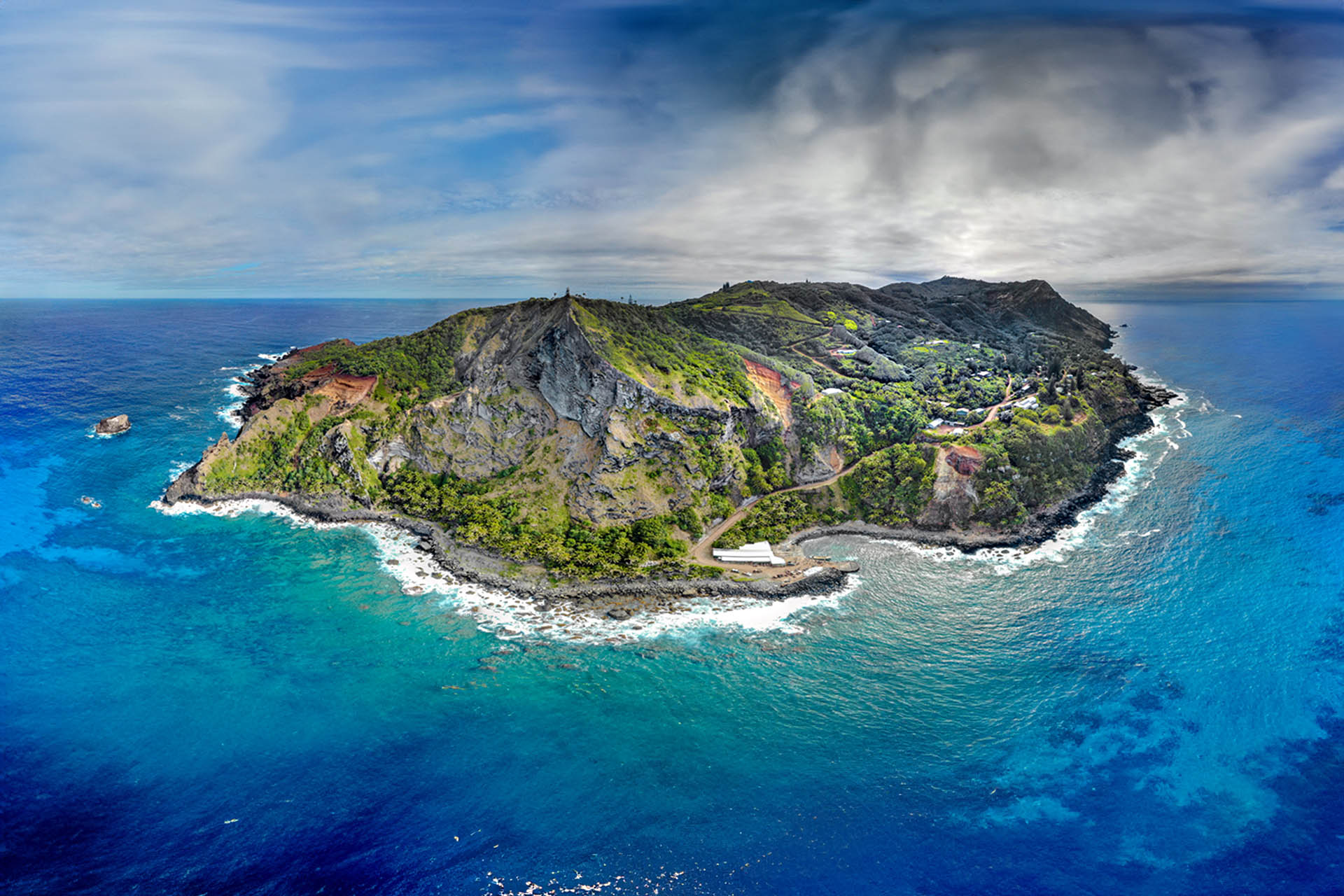
To reach Pitcairn Island from New Zealand — the nearest country with a significant population — you fly to Tahiti, which is already in the middle of nowhere by the standards of most atlases, and then wait for the supply ship. The *MV Silver Supporter* runs to Pitcairn roughly once a month, weather permitting. The crossing takes 32 hours each way, across a stretch of the South Pacific that contains no other inhabited land, no shipping lanes worth the name, and a quality of oceanic emptiness that the word "remote" approaches but cannot fully capture. When the ship anchors in Bounty Bay — there is no harbor, no pier capable of receiving a vessel of any size — the island's population comes down to the water in longboats to collect the cargo, the mail, and whatever passengers have made the journey.
The population that comes down to the water is, at the time of writing, approximately 45 people. This number fluctuates — a birth, a departure, someone returning after years away — but it has remained in this range for the past decade, and the trajectory of Pitcairn's demographic history is unambiguous: the island that had 233 residents at its nineteenth-century peak has been shrinking for generations, and the question of whether it will continue to exist as an inhabited place is one that its remaining residents live with every day, not as an abstraction but as the practical condition of their existence.
Pitcairn is a British Overseas Territory, which means its survival or disappearance is ultimately a matter that involves the United Kingdom's willingness to maintain an administrative and logistical commitment to a community of 45 people on an island that produces no strategic resource and costs considerably more to support than it generates. It is the smallest and most isolated jurisdiction on earth. It is also, in ways that require some unpacking, one of the most historically dense, culturally specific, and humanly remarkable places on the planet.
The Mutiny That Made a Nation
Every inhabited place on earth was settled by someone who came from somewhere else, but few have a founding story as dramatically specific as Pitcairn's. On April 28, 1789, in the waters of the South Pacific near the island of Tofua, Fletcher Christian led a mutiny aboard HMS Bounty against its commander, Lieutenant William Bligh. Bligh and eighteen loyal crew members were set adrift in a small boat — making one of the most extraordinary open-water navigations in maritime history, arriving in Timor 47 days and 3,618 nautical miles later — while Christian and eight other mutineers sailed the Bounty in search of a place to hide from the Royal Navy's inevitable pursuit.
The mutiny's causes have been debated for two centuries. Contemporary popular accounts tend toward the romantic: Bligh as tyrant, Christian as hero, the crew seduced by the pleasures of Tahiti after months of residence there collecting breadfruit plants. The historical picture is more complex — Bligh was by contemporary naval standards not an unusually harsh commander, and Christian's motivations appear to have included genuine grievance alongside personal tensions that the historical record is insufficient to fully untangle. What matters for Pitcairn's story is not the cause but the consequence: nine men with a stolen ship, needing to disappear.
After returning to Tahiti and taking aboard twelve Tahitian women, six Tahitian men, and a teenage Tahitian boy, Christian led the small company to Pitcairn — an island discovered by a British naval vessel in 1767, incorrectly charted, and therefore difficult for pursuers to find. They arrived on January 15, 1790. They burned the Bounty to prevent its detection from passing ships. And they began, without any plan beyond survival, to build a community.
The first years were catastrophic. The Tahitian men, brought aboard in social roles more analogous to servants than settlers, were denied equal land allocation and social status by the English mutineers. Violence followed: by 1793, four of the English men and all six Tahitian men were dead, killed in a sequence of conflicts over land, women, and the hierarchies the English had tried to import from a world they had deliberately fled. By 1800, ten years after settlement, only one of the original nine mutineers remained alive: John Adams, who had taken the name Alexander Smith during the settlement's violent phase and who would live until 1829, becoming the community's patriarch, teacher, and moral authority.
What Adams did with the survivor's authority is one of the more remarkable acts of cultural institution-building in Pacific history. He taught the island's children — the mixed-heritage offspring of the English mutineers and Tahitian women — to read from the Bounty's Bible and from a Book of Common Prayer, organizing the community's social life around a form of Christianity that was simultaneously the only moral framework he had to offer and a genuine personal conversion from the violence of the community's early years. When American and British ships began stopping at Pitcairn and finding the community that Adams had constructed — orderly, literate, deeply religious, hospitable — they encountered something that the nineteenth century found almost impossibly affecting: a tiny, isolated, morally earnest society that had emerged from the worst possible foundations and made itself, against all odds, good.
Polynesian Roots and the Hybrid Culture That Grew
The emphasis on the Bounty mutiny as Pitcairn's founding story tends to obscure the equally significant Polynesian dimension of the island's cultural heritage. The Tahitian women who came aboard the Bounty — Isabella, Maimiti, Toofaiti, and others, some of whom came willingly and some under circumstances the historical record treats more ambiguously — were not passive recipients of English culture. They were the primary transmitters of the practical knowledge that kept the settlement alive.
In the early years, it was the Tahitian women who knew how to cultivate the island's soil, how to identify the edible plants that grew wild, how to fish the waters around Pitcairn in the ways appropriate to a volcanic South Pacific island, and how to build and maintain the physical structures of daily life in a tropical environment. The English men knew how to sail a ship and not much else that was relevant to their situation. The community's survival in the first decade was as much a Tahitian achievement as an English one, a fact that the island's subsequent cultural self-presentation — heavily centered on the Bounty story, the English heritage, the British Overseas Territory status — has not always fully acknowledged.
The linguistic evidence is revealing. **Pitkern** — the creole language that is the native tongue of Pitcairn Islanders — is a hybrid of eighteenth-century English and Tahitian, grammatically distinct from either parent language and intelligible to speakers of neither without exposure. Words and grammatical structures from both sources have been combined into something new, in the process that creolization always involves: two languages in contact under conditions of necessity, producing a third that is neither but contains both. *Whutcha doin?* ("What are you doing?"), *I se gwen* ("I'm going"), *dem* (they/them) — these are recognizably English-derived. But the syntax and many of the noun forms carry Tahitian influence that a linguist can trace to specific source forms. Pitkern is a minor world language by any quantitative measure — roughly 45 native speakers, with several hundred more in the Pitcairn diaspora in New Zealand and elsewhere — but it is the most distinctive artifact of the hybrid culture that Pitcairn's founding produced.
Henderson, Ducie, and Oeno: The Archipelago Beyond Adamstown
Pitcairn Island is, administratively, only the inhabited component of the Pitcairn Islands group, which includes three other islands: **Henderson**, **Ducie**, and **Oeno**. None of these has a permanent population, but each matters to the Pitcairn community in ways that go beyond the territorial and ecological.
**Henderson Island** — 169 kilometers northeast of Pitcairn — is the group's most significant natural heritage site and one of the world's most remarkable examples of an elevated coral atoll ecosystem. Its isolation from human settlement meant that when scientists began studying it in the twentieth century, they found a largely intact island ecosystem with four bird species found nowhere else on earth: the Henderson petrel, the Henderson fruit dove, the Henderson reed warbler, and the Henderson crake. The island was designated a UNESCO World Heritage Site in 1988, recognized for its "outstanding universal value" as one of the few remaining examples of a pristine raised coral island ecosystem.
Henderson is also, however, one of the most severely plastic-polluted beaches on earth — a finding that has made it a reference site in global ocean pollution research. The island's position in the South Pacific gyre means that ocean currents deliver vast quantities of floating debris to its shores continuously, despite its utter uninhabitedness. An estimated 37.7 million pieces of debris have accumulated on Henderson's beaches, with thousands of new items washing ashore daily. The juxtaposition is stark: a UNESCO World Heritage site of exceptional ecological value, simultaneously a monument to the global plastic pollution problem. The Pitcairn community, who regard Henderson as part of their territory and who make periodic visits to the island to collect specific materials and to appreciate its remarkable character, live with this contradiction as a daily fact of their relationship to the Pacific they inhabit.
**Oeno**, a coral atoll 128 kilometers northwest of Pitcairn, is visited by Pitcairn Islanders annually for what amounts to a communal holiday — camping on the beach, fishing the lagoon, enjoying a days-long respite from the social intensity of living in a community of 45 people in which everyone knows everything about everyone. The Oeno trip is reported by Pitcairners as one of the year's most anticipated events: a change of scenery that is also a strengthening of the bond to the broader territory that defines their place in the Pacific.
Daily Life in Adamstown: The Logistics of 45
Adamstown — Pitcairn's sole settlement, a cluster of houses along a ridge above Bounty Bay — is a place that requires different frameworks to understand than any conventional town or village. The normal infrastructures of settled human life are either absent, minimal, or organized on a community-managed basis that blurs the distinction between public utility and collective household.
There is no hospital. Medical emergencies are handled by a designated medical officer — a Pitcairner trained in basic and emergency medicine — supplemented by telemedicine consultations with New Zealand physicians and, in cases serious enough to require evacuation, the harrowing logistics of getting a patient aboard a ship and across 32 hours of open ocean to Tahiti, and then onward to New Zealand. A dental team visits periodically. Childbirth, if it happens on-island, is attended by the medical officer and whatever traditional knowledge the community can bring to bear. Serious illness or trauma on Pitcairn is a life-threatening situation in a way that it is not in any community with access to emergency services.
The island generates its own electricity through diesel generators — fuel being among the most important items on the monthly supply ship's manifest — supplemented by solar panels installed in recent years as both a cost-reduction and environmental measure. Internet access, established in the early 2000s, transformed the community's relationship to the outside world in ways that residents describe as profound: the ability to communicate in real time with family members in New Zealand, to participate in telemedicine consultations, to shop online for the goods that the supply ship cannot carry, and to maintain the social connections that sustain mental health in a community where physical social options are limited to the same 45 people every day.
The economy is minimal by any conventional measure. The main income sources are the sale of honey, handcrafted goods — carvings, woven baskets, handicrafts made from the wood of local species — and postage stamps. Pitcairn stamps, issued in limited quantities for the philatelic market, have historically generated disproportionate revenue given the island's size: stamp collectors worldwide have made the Pitcairn Islands Philatelic Bureau a reliable income stream. More recently, the island's domain name — .pn, the country code top-level domain for the Pitcairn Islands — has generated licensing income from the global internet economy, an unexpected benefit of sovereignty in the digital age.
Fishing and agriculture supplement the community's food supply. The island's soil, enriched by volcanic activity, is fertile enough to support gardens of tropical vegetables, fruit trees (bananas, breadfruit, citrus), and the chickens and goats that provide protein alongside the fish that the surrounding ocean — among the most pristine marine environments remaining in the Pacific — yields in abundance. Self-sufficiency is not complete — the supply ship carries significant quantities of food and materials — but the community's relationship to its natural environment retains more of the practical intimacy that characterized Pitcairn's early settlement than most contemporary communities maintain with theirs.
The Crisis and the Courts: The 2004 Trials
Any account of Pitcairn's community heritage must engage with the events of 2004, when six Pitcairn men — representing a substantial fraction of the island's adult male population — were convicted of historical sexual offenses against girls and women of the community, following a police investigation that had begun in 1999. The trials and convictions, held partly on Pitcairn and partly in New Zealand, produced a period of profound crisis in the community: the accused included some of the island's most prominent figures, and the cultural defense arguments advanced by the defendants — that the behavior had been normalized within the community, that Pitcairn's isolation had created its own social norms — were rejected by the courts while generating intense external debate about the relationship between cultural specificity and universal legal standards.
The aftermath reshaped the community in ways that are still being navigated. Some convicted men served their sentences in a purpose-built prison on the island — the only practical option given the impossibility of housing them in the UK — before their release. The population decline of the following years is attributable in part to the community's difficulty attracting new residents in the wake of the scandal, and to the departure of some existing residents who found the post-trial social environment untenable.
This history is not separable from Pitcairn's community heritage, and any account that omits it in favor of a purely romantic treatment of the Bounty story and the South Pacific idyll is providing a partial picture. What the events of 2004 revealed about the vulnerabilities of extreme isolation — the ways in which small, closed communities can develop internal norms that outsiders would identify as pathological, and the difficulty of accountability mechanisms when the community is both judge and judged — is as much a part of Pitcairn's story as the remarkable survival narrative that preceded it.
The Population Question: Survival or Abandonment?
The question of Pitcairn's demographic future is one that the British government, the island's residents, and a wider community of Pacific scholars and heritage advocates approach with different frameworks and different stakes.
From the British government's perspective, maintaining an inhabited Pitcairn is a significant and ongoing financial commitment — the territory receives annual budget support that, divided by 45 residents, represents a per-capita subsidy that would be difficult to justify to a domestic electorate unfamiliar with the strategic and heritage dimensions of the commitment. The argument for continued support rests on a combination of legal obligation (British Overseas Territories are Britain's responsibility under international law), strategic rationale (a populated territory in the South Pacific maintains British presence and maritime claims in the region), and heritage value (Pitcairn represents an irreplaceable piece of human history that abandonment would extinguish).
From the residents' perspective, the question is more immediate and more personal. Many Pitcairners are descendants of families who have lived on the island for seven generations — the Youngs, the Browns, the Christians, the Warrens, whose surnames map directly onto the Bounty's crew and the Tahitian women who came with them. The island is not just where they live; it is what they are. The prospect of leaving is not simply logistical but ontological — a loss of the specific cultural identity that Pitcairn residence confers and that nowhere else can replicate.
The recruitment of new residents — advertised periodically by the Pitcairn government with a package that includes free land — has produced a small but consistent stream of interest from people worldwide who are drawn to the idea of life on the world's most remote inhabited island. The conversion rate from interest to actual settlement is low: the reality of Pitcairn — the isolation, the limited services, the social intensity of a 45-person community, the absence of most of what contemporary life in developed countries provides as a baseline — is a significant filter. Those who do make the transition and stay tend to report an experience that is simultaneously more difficult and more meaningful than they anticipated.
Heritage in the Living Sense
What Pitcairn preserves — imperfectly, under constant pressure, with the daily effort that small community survival always requires — is not merely historical information about a famous mutiny. It is a specific, irreplaceable form of human community: the knowledge of what it takes to exist in radical interdependence, to maintain functional social relations with the same small group of people across a lifetime, to relate to a natural environment with the direct, unmediated intimacy that isolation enforces.
The island's Pitkern language is a cultural artifact of the highest order — a linguistic record of cultural contact that exists nowhere else in the world, spoken by a community small enough that its disappearance from living use is a realistic possibility within a generation if the demographic trend continues. The fishing knowledge, the agricultural knowledge, the boat-handling knowledge that allows the longboat to navigate Bounty Bay's challenging surf — all of this is held in human memory and practice, not in archives, and it goes when the people who hold it go.
The heritage argument for Pitcairn's survival is therefore not about preserving a quaint historical oddity for the benefit of outside observers. It is about the loss that occurs when any human community — with its specific language, specific knowledge, specific ways of being in a specific place — ceases to exist. The world does not notice most such losses because they happen slowly, at scale, in places that have not generated the dramatic history that makes Pitcairn legible to outsiders. Pitcairn is unusual in that its founding story is famous enough to have made the community visible, and its size is small enough that its potential disappearance is imaginable in concrete human terms.
Forty-five people. One island. A language no one else speaks. A history that began with mutiny and fire and has continued, through violence and community-building and survival and scandal and the daily logistics of the most isolated settlement on earth, for 235 years.
The longboats still go out to meet the supply ship when it anchors in Bounty Bay. The gardens still grow above the cliffs. The carvers still work the miro wood. The Sunday service still fills the small church. The children — and there are still children, though not many — still grow up speaking Pitkern to their grandparents and English to the satellite internet and both to the ocean that surrounds them on every side.
Whether this continues is a question that 45 people and one government and the indifferent South Pacific are working out between them, in the only way such questions are ever actually worked out: one day at a time, one supply ship at a time, one generation deciding whether to stay or go.
So far, someone always stays.