The Marriage That Takes a Lifetime: Inside the Comoros Grand Ceremony
The Marriage That Takes a Lifetime: Inside the Comoros Grand Ceremony
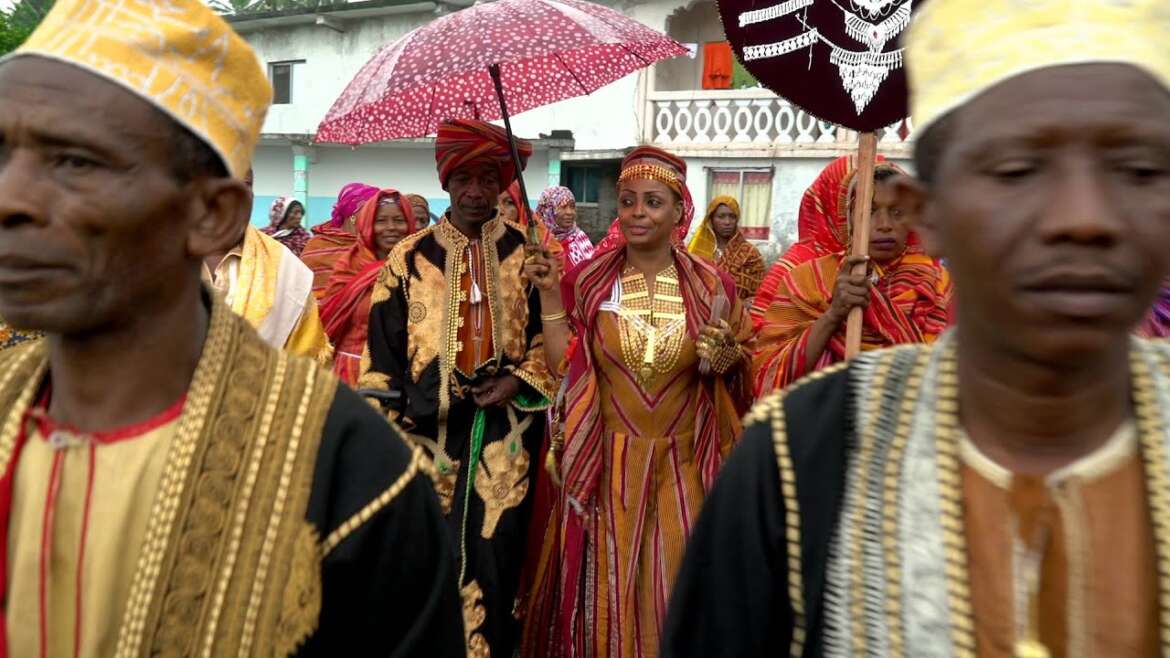
A man in his fifties stands in the courtyard of his family home on the island of Ngazidja, dressed in white robes and a gold-embroidered cap, surrounded by the noise and color of a celebration that has been building for days. He has been legally married to the woman beside him for over twenty years. They have children, grandchildren, a shared house, a shared life. And yet tonight, for the first time, he is truly married — recognized by his community in the full, irreversible, socially ratified sense that matters more in the Comoro Islands than any civil registry or religious certificate ever could. Tonight he is completing the **Anda**: the Grand Marriage, the ceremony that no Comorian man can consider his life fully accomplished without, and that no amount of legal documentation can substitute for.
The Comoro Islands — a small archipelago in the Indian Ocean between Madagascar and the East African coast — are not widely known outside the African Union and the circles of scholars who study Indian Ocean civilizational exchange. But within their 1,862 square kilometers, the Comorian people have developed one of the world's most elaborate and sociologically fascinating marriage traditions: a ceremony so demanding in its requirements, so structured in its form, and so central to every dimension of social life that it functions less like a wedding and more like an entire social system compressed into a sequence of ritualized days. To understand the Grand Marriage is to understand how Comorian society organizes itself — who has standing, who does not, what is owed between families, and what a man's relationship to his community ultimately means.
An Archipelago Shaped by Convergence
Before the Grand Marriage can be understood, the Comoros themselves require some introduction, because the ceremony's complexity is inseparable from the cultural complexity of the islands that produced it. The Comoro archipelago — comprising the four main islands of Ngazidja (Grande Comore), Mwali (Mohéli), Nzwani (Anjouan), and the French-administered Mayotte — sits at the intersection of multiple major civilizational currents. Arab traders settled there from at least the sixth century CE, bringing Islam and establishing the archipelago as a node on the Indian Ocean trading network. Bantu-speaking migrants arrived from the East African coast, bringing the linguistic and cultural substrate on which the islands' identity was built. Persian merchants contributed to the mercantile culture of the port towns. Malagasy influence arrived from the south. And much later, French colonialism layered its own administrative and cultural legacy over everything that preceded it.
The result is a culture that is simultaneously African, Arab, and Indian Ocean — one that practices a deeply observed Sunni Islam while maintaining pre-Islamic social structures that Islamic jurisprudence technically disapproves of; that speaks Comorian (a Bantu language with extensive Arabic loanwords) while writing formally in Arabic and administratively in French; and that has organized its social life around a matrilineal kinship system in which houses, land, and certain forms of social identity pass through the female line, even as Islamic inheritance law and male religious authority formally structure the community's public life.
The Grand Marriage emerges from this convergence. It is Islamic in its ceremonial prayers and its framing as a fulfillment of religious duty, but it is unmistakably Comorian — specifically Ngazidjan — in its social logic, its duration, its material requirements, and the particular form of status it confers. There is nothing quite like it elsewhere in the Islamic world, and this distinctiveness is not incidental. It is the product of the specific history that the Comoros have lived through — a history that created a social system in which the wedding ceremony became the central mechanism through which the community's most important values were enacted and reproduced.
What the Anda Actually Is
The Grand Marriage — *Anda* in Comorian, *Grand Mariage* in the French that most international documentation uses — is not a single event but a sequence of ceremonies, preparations, and social obligations that can extend over years and whose financial requirements are so significant that most Comorian men spend decades saving for it. The civil marriage (*nikah*), performed according to Islamic rite, is legally sufficient for marriage and is typically completed years or even decades before the Grand Marriage. The Grand Marriage is something different: it is the social marriage, the public claiming of full adult status within the community, and the irreversible entry into the class of men who are recognized as *wanaharusi* — roughly, "completed men," those who have fulfilled the community's ultimate social obligation.
The requirements are staggering by the standards of any ordinary wedding tradition. The groom's family — or more precisely, the groom himself over years of saving, supplemented by contributions from his extended kin network — must provide: elaborate gold jewelry for the bride (historically in specific traditional forms, today adapting to contemporary gold market prices that have made this component increasingly expensive); new clothing for a significant portion of the community; the financing of multi-day feasts that can feed hundreds or thousands of guests; the renovation or reconstruction of the house in which the couple will live (which, in the matrilineal Comorian system, is typically the bride's family house or a new house built for her); musicians, dancers, and performers for the ceremonial events; and the specific ritual gifts and payments that the ceremony's various stages require.
Estimates of Grand Marriage costs in contemporary Comoros range widely depending on family status and social aspirations, but figures equivalent to ten to thirty years of average income are commonly cited in the academic literature, and in some cases the investment is larger still. Families with aspirations to high social status compete — the word is accurate — on the scale of their Grand Marriage ceremonies in ways that can be economically ruinous but that remain, for many Comorian men, the organizing financial goal of their entire adult lives.
The Matrilineal Logic: Houses, Land, and the Female Line
To understand why the Grand Marriage matters so much requires understanding the Comorian kinship system, which operates on principles that run counter to both Islamic inheritance norms and the patrilineal assumptions of most outside observers.
In Ngazidja — the largest island and the one where the Grand Marriage tradition is most elaborate — land and houses pass through the female line. A woman's home is her own and her daughters'; her sons leave to live with their wives. The architectural heart of Comorian village life is the **nyumba ya mji** — the "house of the village," the ancestral family house that belongs to the female lineage and into which daughters are born and return, while sons move outward to marry into other houses. This matrilineal property transmission coexists with a patrilineal religious and political authority — the mosque, the council of elders, the Islamic jurisprudence that governs marriage and inheritance — in a tension that Comorian society has negotiated over centuries into a specific and locally coherent form.
The Grand Marriage is where this tension is most visibly enacted. It is the groom who pays — who must demonstrate, through the scale of his ceremony, that he has the means and the social networks to support a wife who will remain connected to her own family's house and lineage. The bride receives gold, receives a house renovation, receives public recognition as a woman whose family has attracted a man capable of the full ceremony. Her status rises with his performance. The families are bound together by the exchange — not through the bride's transfer from one family to another, as in many patrilineal wedding traditions, but through a more complex mutual recognition that keeps her connected to her own lineage while establishing his claim to full community membership.
This is why the Grand Marriage cannot be entirely understood as about the bride and groom's relationship to each other. It is primarily about each party's relationship to their community — about the public demonstration of values, capacities, and social connections that the ceremony enacts in front of the people who matter most.
The Ceremony in Motion: Days of Transformation
The Grand Marriage typically unfolds across multiple days — in elaborate ceremonies, as many as five to seven — each with its own specific rituals, music, dress codes, and social obligations. The exact sequence varies by family tradition, village, and the financial scale of the ceremony, but certain elements are consistent enough to describe as the tradition's structural backbone.
The preparations begin long before the ceremony itself: the renovation of the bride's house, the accumulation and display of gold jewelry, the commissioning of the elaborate embroidered robes (*shiromani*) that the bride will wear. The bride's preparation involves the application of **msindzano** — a paste made from ground sandalwood, coral, and other aromatic ingredients that is applied to the skin in elaborate patterns by women of the family, both as a beautification and as a protective ritual. The application of msindzano to the bride in the days before the ceremony is accompanied by the singing of specific songs (*twarab*) by women gathered for the purpose — a female-only preparatory ritual that has its own social function as an occasion for the women of both families to establish their relationships.
The public ceremony begins with the groom's **procession** — a formal parade through the village accompanied by musicians playing the *ndzumari* (a type of oboe) and the *gabusi* (lute), and by drummers whose rhythms have specific ceremonial meanings. The groom, dressed in the white robes and embroidered cap that mark his status, is accompanied by his male relatives and supporters in a procession that is simultaneously a display of his social network and a formal announcement to the community that the ceremony is underway. Villagers watch, call out greetings, and signal by their presence that the event is being witnessed — because being witnessed, in Comorian social logic, is what makes the ceremony real.
The **feast** is the ceremony's economic and social core. Feeding the community — and in a Grand Marriage, "the community" can mean hundreds to thousands of people across multiple days — is both a demonstration of the groom's resources and an act of redistribution that creates the social bonds and obligations that will sustain him in the community for the rest of his life. The food served — rice, meat, the specific dishes that are traditional to the ceremony — is prepared by teams of community women in quantities that require days of collective labor. The preparation of food is itself a communal event, with women of the village contributing their time and skill as part of the network of reciprocal obligations that the Grand Marriage both draws upon and reinforces.
The **gold display** — the public presentation of the jewelry the groom has provided for the bride — is a moment of concentrated social evaluation. The pieces are displayed for community assessment, and their quality and quantity are read as direct indicators of the family's wealth, connections, and social seriousness. In some ceremonies the gold is carried through the village on display before being formally presented to the bride. Its absence or inadequacy would be a social failure visible to the entire community; its abundance is correspondingly a public triumph.
Music, Dance, and the Twarab Tradition
No account of the Grand Marriage is complete without the music — specifically the **twarab** (also spelled *tarab*, from the Arabic for musical ecstasy or enchantment), the elaborately arranged vocal and instrumental tradition that is both the ceremony's soundtrack and one of the Comoros' most distinctive cultural contributions to Indian Ocean civilization.
Twarab is a music of synthesis: its roots are in the Arabic *maqam* melodic system, filtered through the East African coast's own musical traditions (the Swahili coast *taarab* is a close relative), adapted to Comorian poetic forms and occasions. Grand Marriage twarab is performed by orchestras that can include ouds, violins, the Comorian *gabusi*, frame drums, and elaborate vocal harmonies — the arrangements are formal and demanding, the performers typically specialists who have trained for years in a tradition passed through family and apprenticeship lineages.
The songs performed at a Grand Marriage are not generic wedding music. They are occasion-specific — composed or selected for the particular moments of the ceremony, carrying texts that address the bride's beauty, the groom's generosity, the quality of the community gathered, and the spiritual dimensions of the ceremony in a poetic vocabulary that a knowledgeable listener parses on multiple levels simultaneously. The best twarab performers are community celebrities, their presence at a Grand Marriage a mark of the ceremony's quality and the family's social connections.
**Mgazidja dance** — the specific ceremonial dance tradition of Ngazidja — accompanies the music, with female dancers performing in elaborate dress at specific ceremony moments. The dances are choreographed sequences rather than improvised, each with its own name and ceremonial function, and the quality of the dancing is evaluated by the watching community with the same seriousness applied to the food and the gold. A well-danced Grand Marriage is a matter of community pride; a poorly danced one is noted and remembered.
Status, Obligation, and the Social Architecture of Debt
The Grand Marriage creates obligations that extend far beyond the ceremony itself. The gifts given, the feast hosted, the community fed — these generate a network of reciprocal obligations (*haki* — rights and duties — in Comorian social vocabulary) that the married couple, and particularly the husband, will spend years fulfilling and having fulfilled in return. When a man who attended your Grand Marriage holds his own, you are obligated to contribute to it, proportionately to what he contributed to yours. When a community member experiences a crisis — illness, loss, hardship — the network of Grand Marriage obligations is one of the mechanisms through which community support is organized.
This network function means that the Grand Marriage is not merely a cultural performance or a status competition — it is infrastructure. The feast that a man is bankrupting himself to provide is simultaneously building the social safety net that will support him in old age, illness, and difficulty. The gold he provides to his bride is simultaneously establishing his family's claim to the community relationships that will sustain it through future generations. The economic logic that makes the Grand Marriage seem irrational from a purely individual perspective — why spend thirty years of savings on a single ceremony? — makes more sense when understood as an investment in the social network that is the primary security system available in a small island community without extensive formal social welfare institutions.
The status conferred by completing the Grand Marriage has direct practical consequences. Men who have completed the Anda are addressed by specific honorifics, seat in positions of respect at community gatherings, and are eligible for roles in community governance and decision-making that are formally or informally restricted to those who have fulfilled this obligation. The incomplete man — one who has not yet held his Grand Marriage — exists in a kind of social liminal state regardless of his other accomplishments. He may be educated, employed, respected in other domains; but within the specifically Comorian hierarchy of social completion, he is not yet fully arrived.
The ultimate consequence of non-completion is burial. In parts of Ngazidja, the traditional belief holds that a man who dies without having completed the Grand Marriage is buried without the full funeral rites, in a manner that marks his incompletion even in death. Whether this practice is universally maintained today is contested, but the belief's persistence as a social reference point illustrates how completely the Grand Marriage saturates the Comorian understanding of what a life well lived — and well concluded — looks like.
The Crisis of Affordability: Tradition Under Economic Pressure
The Grand Marriage's economic requirements have produced a social crisis that Comorian policymakers, Islamic scholars, and community leaders have been publicly debating for decades without resolution. The ceremony's cost — already substantial historically — has escalated dramatically with the global rise in gold prices, the increasing commercialization of the ceremony's various components, and the competitive dynamics that push families to outspend each other in demonstrations of status. A ceremony that was financially demanding in 1970 is now, by some accounts, simply impossible for many Comorian men of ordinary means.
The consequences are significant. Men delay the Grand Marriage into their fifties, sixties, or beyond — living in the civil marriage that is legally and religiously valid while remaining socially incomplete. Some never complete it at all, dying in the liminal state the tradition considers unfinished. Young Comorians of the diaspora — the substantial communities in France, Mayotte, and elsewhere — face the additional burden of contributing to Grand Marriages on the islands while managing economic lives in expensive European cities. Remittances home are often substantially directed toward family Grand Marriage obligations, creating a financial relationship between the diaspora and the islands that both sustains the tradition and intensifies its extractive demands.
Islamic scholars and reform-minded community leaders have periodically proposed simplifying the ceremony — reducing gold requirements, capping feast scales, allowing the civil *nikah* to carry more of the social weight currently borne exclusively by the Anda. These proposals have consistently failed to gain traction, not because the community is unaware of the economic pressure but because the Grand Marriage is not experienced as merely a ceremony. It is experienced as the thing itself — the actual substance of social membership, not a symbol of it. To reduce it is to reduce what it provides, and what it provides is irreplaceable within the Comorian social system as currently constituted.
The young Comorian man who is working in Marseille, sending money home, saving over thirty years for a ceremony he will hold in his fifties, is not the victim of false consciousness or unreasonable tradition. He is rationally pursuing the primary form of social recognition available in his culture — the one that will determine his standing in his community, his burial rites, and his children's ability to claim full membership in the society he came from. The economics are brutal. The logic is coherent.
What the Grand Marriage Knows
The Comoros Grand Marriage is sometimes cited in anthropological literature as an example of "prestige economy" — a system in which wealth is accumulated not for private consumption but for public redistribution as a mechanism of status production. This framing is accurate but incomplete. The prestige economy analysis captures the competitive and hierarchical dimensions of the ceremony without fully conveying what happens between the people involved: the bride receiving her gold; the community fed at the feast; the musicians playing the twarab into a night that the entire village is spending together; the older men watching the procession and remembering their own ceremonies; the children who will remember this one.
What happens is belonging — the most expensive, most elaborate, most socially loaded form of belonging that any culture on earth has devised. And the argument the Grand Marriage makes, implicitly and insistently, is that belonging at this depth and this permanence is worth what it costs. That the community you are joining — the network of obligations, the shared history, the mutual accountability, the specific way your people have organized themselves on these particular islands in this particular ocean — has a value that cannot be adequately expressed through a civil registration or a simple religious ceremony. That some things, to be real, must be made in public, at great cost, witnessed by everyone who matters, and then lived with for the rest of a life.
The man in the courtyard in his fifties, finally completing what he began decades ago, standing in his white robes before the community that has known him since childhood — he is not celebrating a new beginning. He is ratifying a life already substantially lived, in the specific terms that his culture requires for that ratification to count. The ceremony is the seal on a life. And in the Comoros, the seal is the point.