The Forest That Speaks: Gabon's Bwiti Tradition and the Knowledge Beyond the Living
The Forest That Speaks: Gabon's Bwiti Tradition and the Knowledge Beyond the Living
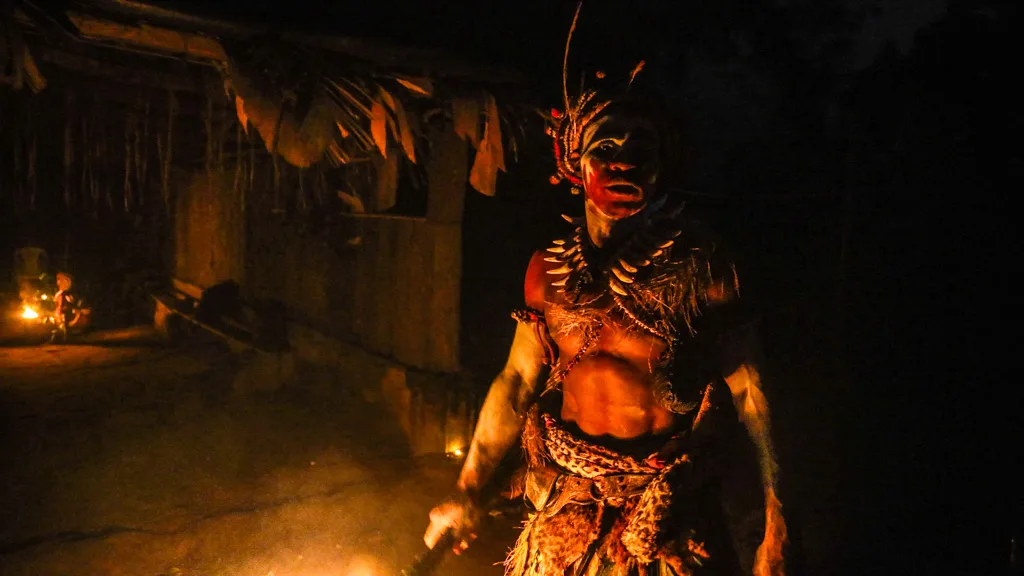
There is a moment in the Bwiti initiation ceremony — and every initiate describes it differently, which is the point — when the individual who entered the forest as one person ceases to exist as that person. The elders who have guided the ceremony through its long night do not announce this. There is no formal declaration. But the community assembled in the *ebanza* — the Bwiti temple, built from forest materials, open on one end to receive what moves through the trees — knows that something has shifted in the person lying on the mat at the ceremony's center, because the forest has ways of communicating that have nothing to do with speech. The drums continue. The *ngombi* harp continues. The singing continues. And the initiate, somewhere beyond the room that their body still occupies, is meeting something that the living world does not ordinarily make available: the knowledge held by the dead.
This is the Bwiti. Not a religion in the Western taxonomic sense — not a set of beliefs held in the mind, a doctrine affirmed through assent, a practice maintained by institutional hierarchy. A way of being in relationship: with the forest, with the ancestors, with the community of the living, and with the dimension of reality that the living world is embedded in but cannot directly see. The Bwiti tradition of Gabon — practiced primarily among the Fang, Mitsogo, Tsogo, and related peoples of the equatorial rainforest — is among the most sophisticated and least understood spiritual traditions in Africa, partly because its sophistication is of a kind that Western frameworks for categorizing religion tend to miss, and partly because it has been systematically misrepresented by sources that were more interested in the pharmacological properties of one of its sacramental plants than in what the tradition does with those properties.
Understanding the Bwiti requires beginning where the tradition itself begins: not with the plant, but with the forest.
Gabon's Forest as Sacred Geography
Gabon is one of the most heavily forested nations on earth. Roughly 85% of its land area — approximately 220,000 square kilometers — is covered by equatorial rainforest, the Congo Basin's western extension, a biological archive of extraordinary density and age. The forest contains species that have been evolving in relative isolation since before the continental configurations of the modern world were established; its understory is so dense and its canopy so complete that large areas receive almost no direct sunlight at ground level, producing an environment of perpetual green dusk that is, for those who know how to read it, intensely legible — full of information about what is growing where, what is moving through, what the forest is doing at this particular moment.
For the communities that have lived within this forest for centuries — the Fang, who migrated from the interior toward the coast over several generations beginning in the eighteenth century; the Mitsogo and Tsogo, older forest inhabitants of the central and southern regions; and dozens of other ethnic groups — the forest is not background. It is the primary fact of existence, the source of food, medicine, building materials, and the specific quality of knowledge that comes from living inside an ecosystem rather than managing it from outside.
The Bwiti tradition grew from this relationship. Its foundational claim — that the forest contains knowledge that the living need and that the dead can mediate — is not metaphorical. It is a description of how the world is structured, from the perspective of communities whose survival has always depended on reading the forest correctly. The ancestors who learned which plants heal and which harm, where the animals move in each season, how the forest behaves before and after rain — that knowledge did not die with the individuals who held it. It returned to the forest, which is where it came from, and where it can be retrieved by those with the preparation and the guidance to do so.
The Origins of Bwiti: Pygmy Knowledge and Forest Lineage
The Bwiti tradition's origins are traced, in the tradition's own account, to the Babongo and Baka peoples — the forest-dwelling hunter-gatherer communities that populated equatorial Central Africa long before the Bantu-speaking agricultural migrations that brought the Fang, Mitsogo, and related groups into the region. These communities — sometimes called Pygmies in older ethnographic literature, a term the communities themselves increasingly reject in favor of their specific ethnic names — are understood within the Bwiti framework as the original holders of the forest's deepest knowledge, including knowledge of the plant that became the Bwiti's primary sacrament.
This attribution is not merely historical. It carries ongoing moral and spiritual weight within the tradition. The Bwiti practitioner who acknowledges the Babongo and Baka origins of the knowledge they work with is acknowledging a debt — a *bunkhun*, to use a concept that appears in different forms across African spiritual traditions — that places them in relationship with forest peoples whose marginalization by the colonial and postcolonial state has been severe. In several Bwiti communities, formal elements of the ceremony still reference Babongo or Baka practices, preserving a record of transmission that also functions as an ongoing acknowledgment of where the knowledge came from.
The Bwiti spread significantly in the nineteenth and twentieth centuries, partly through the disruptions of colonialism — the French colonial administration in Gabon brought populations into closer contact, and the Bwiti's ability to integrate initiates from different ethnic backgrounds made it a vehicle for community formation under conditions of displacement and cultural stress. It also spread because it worked: the initiation's capacity to address the psychological and social crises that colonialism generated — the loss of ancestral connection, the disruption of identity, the trauma of forced labor and cultural suppression — gave it a specific relevance to the conditions of the time that older, more territorially bounded traditions could not always provide.
Iboga: The Plant That Opens the Door
The *Tabernanthe iboga* shrub grows in the understory of Gabon's rainforest, a woody perennial with small yellowish-white flowers and oval orange-yellow fruits. Its roots — or more precisely, the bark shaved from its roots — contain a complex mixture of alkaloids, the most pharmacologically significant of which is **ibogaine**: a long-duration psychoactive compound with a mechanism of action unlike any other known substance, affecting multiple neurotransmitter systems simultaneously in a way that produces an experience qualitatively distinct from other psychedelic compounds.
The pharmacology is real and increasingly studied. Ibogaine has attracted significant research attention for its apparent ability to interrupt opioid dependency — a single high-dose experience appears, in clinical and observational data, to substantially reduce or eliminate opioid withdrawal symptoms and, in many cases, the craving that follows withdrawal. The mechanism is not fully understood, but ibogaine's combined action at opioid receptors, serotonin transporters, and NMDA receptors, along with its conversion in the body to **noribogaine** (a longer-lasting metabolite), produces an effect profile that conventional addiction pharmacology cannot replicate. Research centers in Mexico, Canada, and several European countries where ibogaine is not legally prohibited have conducted studies with results compelling enough to generate serious scientific interest.
But iboga in the Bwiti context is not an addiction treatment, and the misreading of the Bwiti through the lens of ibogaine pharmacology is the most common and most distorting error in external accounts of the tradition. Iboga is the sacramental vehicle through which the initiate accesses the ancestral domain — the dimension of reality where the knowledge of the dead is held. Its pharmacological properties are in service of this function, not the other way around. The Bwiti practitioner who administers iboga is not a pharmacologist delivering a compound; they are a guide accompanying a traveler into a territory that requires experienced navigation, using a plant that the forest provides for exactly this purpose.
The dosage administered in a full Bwiti initiation is substantially higher than the doses used in addiction treatment research, and the preparation for and container around the experience — the ceremony, the music, the community presence, the guidance of experienced practitioners, the specific ritual framework that gives the experience its meaning and its edges — is understood within the tradition as inseparable from what iboga does. Iboga without Bwiti context is, from the tradition's perspective, not Bwiti — it is a powerful substance taken without the knowledge of how to work with what it reveals.
The Initiation: Death and Return
The Bwiti initiation ceremony — *Bwiti initiation* or *rite de passage* in the French-influenced terminology that Gabonese scholars often use — is typically described as a death and resurrection. This is not metaphor. The initiation is explicitly framed as a journey to the realm of the dead: the initiate crosses a boundary, encounters the ancestors, receives knowledge or instruction that the living world cannot provide, and returns — but as a different person, one who has died to their old self and been remade in the encounter with what lies beyond it.
The ceremony is long. In full traditional form, it runs continuously for several days and nights — the initial night being the most intense, the subsequent period being one of integration and graduated return to ordinary consciousness. The preparation period that precedes the ceremony is itself substantial: weeks or months of dietary restriction, sexual abstinence, and instruction in the principles of the tradition that will give the experience its interpretive framework. An initiate who enters the ceremony without this preparation is, in the Bwiti view, entering a territory without a map.
The *kombo* — the initiated guide who accompanies the initiate through the experience — is the ceremony's human center. The kombo's role combines elements of what Western frameworks might call a therapist, a priest, a navigator, and a translator. They monitor the initiate's physical and psychological state, interpret what the initiate reports seeing or encountering, guide them back from states that threaten to become overwhelming, and help them understand, in the days following the ceremony, what the experience is asking of their life. The relationship between kombo and initiate is understood within the tradition as a transmission — the kombo's own initiation experience, their years of working with others in ceremony, and their accumulated relationship with the ancestral realm are all present in their guidance.
The ancestral encounters that initiates report are among the most consistently described features of the Bwiti experience, despite the enormous variability in the experience's content. Across different accounts — collected by ethnographers including James Fernandez, whose 1982 study *Bwiti: An Ethnography of the Religious Imagination in Africa* remains the most comprehensive academic treatment of the tradition — initiates describe encounters with specific deceased relatives, reception of messages or instructions from ancestral figures, and experiences of life review in which the narrative of their existence is made visible and its meaning clarified. The specificity and emotional intensity of these encounters — the consistent report of meeting people the initiate knew and receiving information that has subsequent verifiable content — is among the features of Bwiti initiation that most challenge purely neurological accounts of what iboga produces.
The Ebanza: Sacred Architecture of the Ceremony
The Bwiti ceremony takes place in the *ebanza* — a dedicated ceremonial structure built from forest materials to specifications that vary by region and lineage but consistently share certain features: an orientation that places the ceremony within the forest's directional logic, materials gathered from the forest itself, and a spatial organization that encodes the cosmological structure of the Bwiti worldview.
The ebanza is not a permanent building in the conventional sense. It is rebuilt or renewed for significant ceremonies, and its construction is itself a ritual act — the gathering of specific materials, the assembly in a specific order, the orientation determined by the lineage's specific relationship to the forest directions. The space created is understood as activated by this construction: not a neutral room in which a ceremony will occur, but a space whose specific qualities — the materials it is built from, their origins in the forest, the way light and air move through it — are part of what the ceremony requires.
The *ngombi* — the sacred harp of the Bwiti, an arched instrument with multiple strings whose sound is associated with the voice of the female ancestral principle (*Nyingone Mebege*) — occupies a central position in the ebanza's musical life. The ngombi's playing is not accompaniment to the ceremony; it is participation in it. The specific tonal patterns produced by an experienced ngombi player are understood to communicate with the ancestral realm directly — to call, to guide, to hold open the passage that the initiate is traveling through. The tradition of ngombi playing is transmitted carefully, because a poorly played ngombi in a ceremony is not merely aesthetically inadequate. It is functionally inadequate: the communication it was meant to establish is not established.
**Polyphonic choral singing** is the ceremony's vocal dimension — the Bwiti tradition contains an extensive repertoire of sacred songs whose harmonics, rhythm, and specific textual content correspond to different phases of the initiatory journey and different states of relationship with the ancestral realm. The singing maintains the ceremonial space's integrity throughout the long night: it is the human community's continuous assertion of its presence and intention, the envelope of sound that holds the initiate within the community's care even as they travel beyond ordinary consciousness.
Christianity, Syncretism, and the Colonial Encounter
The Bwiti tradition's relationship with Christianity is one of the most complex and least sentimentalized examples of religious encounter in African history. The French Catholic missionaries who arrived in Gabon from the mid-nineteenth century onward found the Bwiti — which was already expanding as a response to the dislocations of the slave trade and early colonialism — to be among their most serious competitors, not because the tradition resisted Christianity in the simple sense of rejection, but because it absorbed it.

Several lineages of Bwiti, including the **Fang Bwiti** that spread rapidly in the colonial period, incorporated Christian iconography, biblical narratives, and ritual elements into the existing framework — not as submission to Christianity but as acquisition. The figure of Jesus Christ appears in some Bwiti lineages as an ancestor of a specific kind: a being who died and returned, who possessed knowledge of the realm beyond death, and who could therefore be understood as a powerful figure within the ancestral cosmology that the Bwiti tradition already navigated. The cross appeared as a directional symbol consistent with Bwiti spatial cosmology. Biblical narratives were reinterpreted through the lens of initiatory death and return.
This syncretism infuriated colonial missionaries and administrators, who recognized it as something other than conversion. The Bwiti was not becoming Christian; it was incorporating Christian elements into a framework that remained fundamentally its own. French colonial authorities banned the Bwiti at various points during the twentieth century — bans that were as ineffective as most colonial prohibitions of indigenous spiritual practices, driving the ceremonies deeper into the forest without eliminating them.
The postcolonial Gabonese state has taken a different position. Gabon's first president, Léon Mba, was a Bwiti initiate — a fact that gave the tradition political protection in the early independence period. The tradition has since occupied an ambiguous but generally tolerated position in Gabonese public life: not officially endorsed as a state religion, but not suppressed, and increasingly recognized as a cultural heritage asset as Gabon has developed its cultural identity in the postcolonial period.
UNESCO Recognition and the Question of Protection
In 2008, UNESCO inscribed Bwiti — specifically described as the *Bwiti spiritual practice of the Pygmies of Gabon* — on its Representative List of Intangible Cultural Heritage of Humanity, recognizing the tradition's cultural significance and the need for measures to support its transmission. The recognition was welcomed by Bwiti communities and by Gabonese cultural institutions, though with the characteristic ambivalence that UNESCO recognition tends to generate among living traditions: the inscription acknowledges importance without necessarily providing the material support or legal protection that would concretely address the tradition's vulnerabilities.
The tradition's primary vulnerabilities are intergenerational. The knowledge required to conduct Bwiti ceremonies properly — to cultivate and prepare iboga appropriately, to guide initiates safely through the experience, to play the ngombi at the level of proficiency the tradition requires, to know the extensive repertoire of sacred songs and their proper contexts — takes decades to acquire and requires transmission from experienced practitioners to younger ones over sustained periods of apprenticeship. As urbanization draws young Gabonese toward Libreville and away from the forest communities where the tradition is most alive, and as experienced practitioners age without always finding successors, the transmission chains that carry Bwiti knowledge are under real pressure.
The international interest in iboga — driven primarily by its potential in addiction treatment — adds a different kind of pressure. Medical tourism to Gabon for iboga treatment has created an economic incentive structure around the plant that does not always align with the tradition's own priorities. Iboga harvested for export or for uncontextualized ceremonial use outside Gabon reduces the supply available for Bwiti ceremonies, raises prices that make traditional practice harder to sustain, and creates a global market in the plant that operates entirely outside the tradition's own governance structures. The Gabonese government classified iboga as a national treasure in 2019 and has restricted its export, a policy motivated partly by conservation concerns (the plant is threatened by overharvesting) and partly by the recognition that the plant's value is inseparable from the tradition that developed knowledge of its use.
What the Ancestors Know
The question that the Bwiti tradition has been asking for centuries — what do the dead know that the living have forgotten? — is not abstract. It is the question of a community that has experienced its knowledge as continuous with the knowledge of those who came before it, that understands its relationship to the forest as a relationship with something that precedes and exceeds any individual human life, and that has developed, over generations, a sophisticated set of practices for maintaining access to that larger continuity.
The knowledge that initiates return with from the Bwiti ceremony is characteristically not philosophical. It is specific: a clarity about what this particular life requires, a release from a pattern that has been blocking growth, a message from a specific ancestor that illuminates a specific situation. The tradition is not interested in abstract enlightenment. It is interested in the practical question of how to live well within the web of relationships — with the living, the dead, the forest, and the dimension of reality that the forest is a face of — that constitutes a human existence.
This practical, relational orientation is what makes the Bwiti difficult to assimilate into the categories that Western spiritual tourism tends to bring to it. The ceremony is not a "psychedelic experience" in the sense that term has acquired in contemporary wellness culture — a temporary expansion of individual consciousness, a personal growth opportunity, something the participant can integrate into their ordinary life and carry with them as a new perspective. It is an initiation: a permanent change in relationship and status, a joining of a community that extends in both directions through time, an acceptance of obligations to the living and the dead that do not expire when the ceremony ends.
The forest that the Bwiti tradition tends is not primarily a physical forest, though it is also that — the actual equatorial rainforest of Gabon, which the tradition has strong interests in protecting because the plants it requires grow there and because the relationship with the forest is the relationship the tradition is built on. It is the forest of connection: between the generations, between the living and the dead, between human knowledge and the knowledge that the world carries without being asked to, patient and available to those who have learned how to ask.
The initiate who returns from the Bwiti ceremony returns from that forest. What they carry back — the knowledge, the encounter, the changed sense of what they are and what they owe — is not something that can be extracted from the tradition that produced the conditions for its receipt. It belongs to the forest. And the forest, the Bwiti would say, is tending it still.