The Elegance of Resistance: Inside the SAPE Culture of the Republic of the Congo
The Elegance of Resistance: Inside the SAPE Culture of the Republic of the Congo
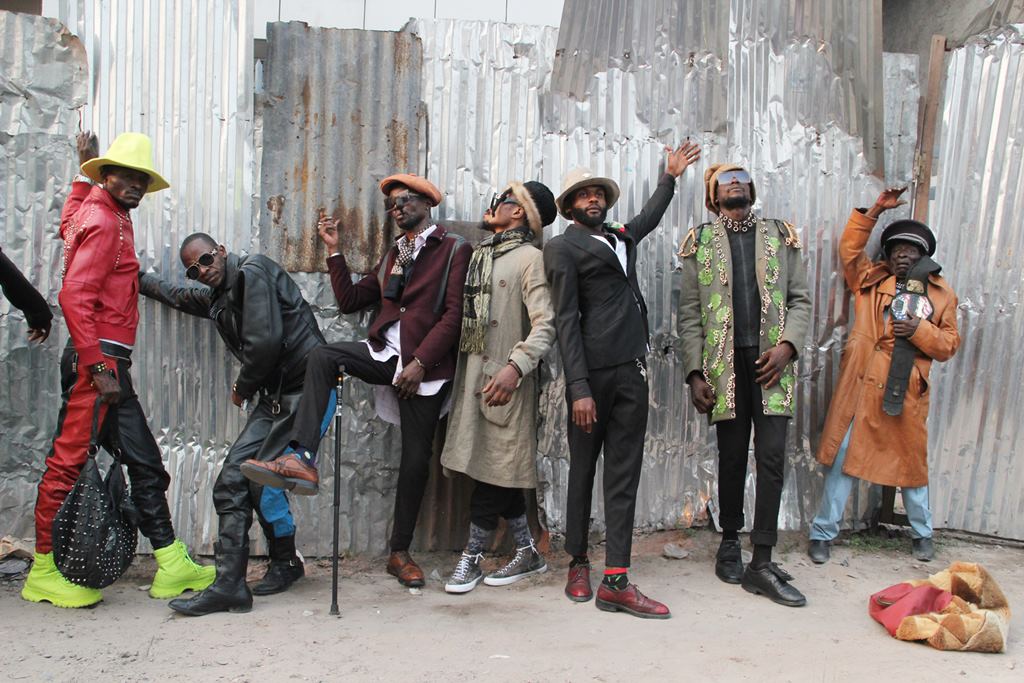
The funeral cortège moves through the Bacongo neighborhood of Brazzaville on a Tuesday afternoon, and something is wrong with the picture — or rather, something is more right with it than funerals usually are. Behind the coffin, six men walk in formation. They are wearing Yves Saint Laurent, Versace, and Weston shoes. Their suits are impeccably cut, their pocket squares geometric, their hats at angles that required a mirror and several minutes to achieve. Their faces carry the specific expression that sapeurs call *la classe* — a composure that is not coldness but its opposite: a warmth so controlled it becomes dignity, an awareness of being watched that has been so thoroughly internalized it no longer reads as performance. They are not dressed this way despite the occasion. The occasion is why they dressed this way. Death deserves the highest register of human beauty available. The sapeur gives death what he gives everything that matters: his absolute best.
**SAPE** — the *Société des Ambianceurs et des Personnes Élégantes*, the Society of Ambiance-Makers and Elegant People — is one of the most philosophically dense subcultures on the planet, operating in one of the world's most economically constrained environments, producing one of the most visually spectacular phenomena in contemporary global style. It is simultaneously a fashion movement, a social philosophy, a form of political resistance, a spiritual practice, and a competitive sport. It has been the subject of documentary films, academic papers, fashion editorials, and an Adidas advertising campaign. None of these framings is wrong, exactly, and none of them is sufficient.
To understand SAPE, you must first understand what it means to be elegant in Brazzaville — and what it costs.
The City and the Cloth: Brazzaville as Context
The Republic of the Congo — not to be confused with its much larger neighbor the Democratic Republic of the Congo across the river — is a central African nation of approximately 5.8 million people whose capital, Brazzaville, sits on the southern bank of the Congo River, facing Kinshasa across less than two kilometers of water. The two cities, separated by this narrow stretch of the world's deepest river, form one of the world's only international capital pairs visible to each other from the shore.
Brazzaville's economy has been shaped by oil revenues that have produced remarkable inequality: significant wealth for the political and business elite, grinding poverty for the urban majority. The Bacongo and Poto-Poto neighborhoods where sapeur culture is most concentrated are neighborhoods of unpaved streets, corrugated iron roofing, and monthly incomes that, for a significant portion of the population, would not cover the cost of the shoelaces on a sapeur's Weston loafers. This context is not background to SAPE. It is its subject matter.
The Congo River's position means that Brazzaville was, from early in the colonial period, one of the most connected cities in central Africa — a transit point, a commercial hub, and eventually the capital of French Equatorial Africa, with all the cultural exposure that a colonial administrative center provides. European clothing, manners, and consumer goods arrived in Brazzaville early and in quantity, and the Congolese relationship to that material culture was never simply imitative. It was appropriative in the strategic sense — taking what had arrived as the colonizer's marker of superiority and turning it into something the colonized used to construct their own social architecture.
Origins: Papa Wemba and the Sapeur Ancestors
The roots of SAPE extend into the early colonial period, when Congolese men — particularly those with access to urban wages and to the European goods flowing through Brazzaville's commercial networks — began developing what historians of the movement describe as a *dandyisme congolais*: a way of dressing in European clothing that exceeded the European models in its deliberateness, its investment, and its social seriousness. The Congolese dandy of the 1920s and 1930s was not aspiring to European status. He was demonstrating mastery over a material vocabulary that Europeans assumed was theirs and that Congolese men were now claiming and exceeding.
The mid-twentieth century saw several figures who crystallized what would become SAPE, but the movement's most important single figure is **Papa Wemba** — Joseph Shambukita Wemba, born in 1949 in what was then the Belgian Congo, who became the most celebrated musician in Congolese popular music (*rumba congolaise* and later *soukous*) and who made the sapeur's elegance inseparable from his musical identity. Papa Wemba did not merely dress well. He theorized the dress, articulated its philosophy in interviews and performances, and used his international fame — his music reached across Africa and into Europe and Latin America — to project the sapeur aesthetic to audiences who had no prior encounter with it.
Papa Wemba's formulation of the sapeur's code was explicit: SAPE was not vanity, not conspicuous consumption in the Western criticism-ready sense, but a discipline — a practice of self-cultivation as demanding in its way as any spiritual or artistic discipline, with its own aesthetic standards, ethical requirements, and modes of transmission between generations. He called it *la sape* and he lived it without irony, wearing Miyake and Gaultier to press conferences, taking Congolese youth to Paris not only to perform but to acquire the pieces that would mark their elevation within the movement's hierarchy.
The formal acronym — *Société des Ambianceurs et des Personnes Élégantes* — was established in Paris, where Congolese immigrants had formed diaspora communities in the 1970s and 1980s that became important nodes in the movement's geography. Paris mattered not only because European luxury brands were available there but because the city was the referential center of the sartorial universe from which SAPE drew its vocabulary. A sapeur who had been to Paris — who had acquired pieces *en Paris*, had walked the streets of the Marais or the Champs-Élysées dressed in full regalia, had demonstrated his elegance on the terrain of the style's source — carried a prestige that Brazzaville could confirm but not fully confer.
The Philosophy of the Suit: What a Sapeur Actually Believes
The misreading of SAPE as simple status consumption — poor men spending irrationally on luxury goods to signal wealth they don't have — is so persistent and so wrong that it requires direct confrontation. Sapeurs are not performing wealth. They are asserting humanity.
The distinction is not subtle. In a social context defined by colonial history that constructed Africans as less-than, as primitive, as outside the category of civilization that European dress codes encoded, to dress with more deliberate mastery of European sartorial standards than Europeans themselves displayed was a political act. The sapeur who wears a better-cut suit than any European in the room, who knows more about the provenance and quality of the fabric, who has invested more thought and more of his income in the construction of this aesthetic statement — he is not deferring to European standards. He is defeating them on their own terms, and then transcending them by making the defeat graceful.
The sapeur's ethical code — transmitted through the movement's internal culture rather than any written document — includes specific prohibitions that further distinguish SAPE from mere fashion enthusiasm. A true sapeur does not carry weapons. Does not engage in violence. Does not use drugs. Does not associate with crime. The elegance of SAPE is not available to the violent or the corrupt; it must be earned through legitimate means, however hard those means are to access, and maintained through conduct that matches the clothing. A sapeur who dresses magnificently but behaves dishonorably is understood within the movement to have failed at the fundamental level — the clothes are the outward expression of an inner state, and an inner state built on dishonor cannot sustain the outward expression regardless of the label's quality.
This ethical dimension gives SAPE its most radical claim: that dignity is not granted by circumstance. That a man who earns little, lives in a neighborhood without running water, and has been systematically excluded from the material prosperity that surrounds him in the global economy can nevertheless choose, through the exercise of discipline, taste, and community, to exist in a register of beauty that denies the terms of his exclusion. The suit is not an escape from poverty. It is a refusal to be defined by it.
The Grammar of Elegance: How to Read a Sapeur
SAPE has an aesthetic vocabulary so precise that insiders can evaluate a sapeur's level, experience, and mastery of the tradition within seconds of seeing him walk. The evaluation is not primarily about the label — though label matters, and the prestige hierarchy of European luxury brands is known in Brazzaville with an accuracy that would surprise many Western consumers — but about the totality of the presentation: the fit, the color combination, the proportion, the accessories, and most crucially, the *port* — the way the clothes are worn, the physical bearing that animates them.
**Color** is the most immediately legible element of sapeur style, and it is where SAPE most dramatically departs from European sartorial convention. The muted, conservative palette of European business dress — navy, charcoal, grey, black — is the baseline from which sapeurs frequently and deliberately depart into combinations of startling vividness. Chartreuse suits with cobalt accessories. Coral jackets with lime-green pocket squares. Lavender three-pieces with matching shoes dyed to order. These are not errors of taste or the exuberance of inexperience. They are demonstrations of mastery — the ability to combine colors that should not work and make them work, which requires a more sophisticated understanding of color theory than the safe palette of conventional dress ever demands.
**Shoes** occupy a position of particular significance within SAPE's aesthetic hierarchy. The brand **Weston** — a French shoemaker whose handmade leather shoes begin at prices that represent weeks of wages for many Brazzaville residents — is the sapeur's most prized footwear, to the point where *porter les Westons* (wearing Westons) has become shorthand within the culture for achieving a significant level of sartorial attainment. The shoe's primacy is not arbitrary: in European dress tradition, shoes are the most reliable index of the wearer's actual investment in dress quality (cheap suits can look adequate at a distance; cheap shoes are unmistakable up close), and sapeurs have internalized this logic and taken it further. The condition of the shoes — polished to a specific depth of shine, cared for with specific products, stored correctly — is as much a part of the presentation as the wearing.
**The walk** — *la démarche* — is the element of sapeur performance that no photograph can fully capture. A sapeur in full presentation does not simply move through space. He inhabits it: the pace measured, the posture constructed, the awareness of his own visibility neither denied nor anxiously displayed but simply held, as a fact, with the equanimity that *la classe* requires. Experienced sapeurs describe this quality as something that takes years to develop and that cannot be faked — a relationship to the clothing and to public space that comes from having genuinely internalized the movement's philosophy rather than merely having acquired its wardrobe.
The Descente: Performance as Community Event
The **descente** — literally "descent," the coming down into the neighborhood street in full sapeur presentation — is the performative heart of SAPE and the occasion around which the movement's social life organizes. A descente is not a fashion show in the Western institutional sense. It requires no venue, no invitation list, no official status. It happens when a sapeur or group of sapeurs, dressed at their highest level, walks through the neighborhood and the neighborhood assembles to watch, evaluate, and respond.
The response is communal and immediate. Neighbors who recognize a masterful presentation call out their appreciation — specific comments on specific elements, the color combination's success, the cut of the jacket, the Westons' shine, the hat's angle. Children stop to stare. Other sapeurs assess and are assessed. The street becomes a gallery and a court simultaneously, the judgment distributed and public, the standards upheld not by any individual arbiter but by the community's collective aesthetic knowledge.
Group descentes — in which multiple sapeurs arrive together, sometimes having coordinated their presentations to produce a collective effect of complementary or contrasting elements — are the movement's most spectacular events. Funerals and weddings are the most frequent occasions for these coordinated descentes, death and marriage being the social events that call for the highest register of communal ceremony. The sapeur group at a Brazzaville funeral is not a fashion performance grafted onto a solemn occasion; it is a form of honor paid to the deceased through the most serious means available to the group — the demonstration of beauty, discipline, and elegance that the movement has decided constitutes the highest form of respect.
Paris, Kinshasa, and the Diaspora Geography of SAPE
SAPE has always been a transnational phenomenon, and its geography maps the specific routes of Congolese migration and connection. The Paris connection — established in the 1970s when Congolese musicians, students, and economic migrants formed communities in the northern and eastern arrondissements — gave the movement its most important external node and its most direct access to the luxury brands whose labels structured its prestige hierarchy.
The Paris sapeur community developed its own practices and dynamics, holding descentes in the streets of Château Rouge and La Goutte d'Or, organizing around the bars and music venues where Congolese rumba and soukous was performed, maintaining connection to Brazzaville through the circular migration of musicians and the constant exchange of clothing and information. Papa Wemba's Paris appearances were the most visible nodes in this transnational network — concerts that were simultaneously musical events and sartorial exhibitions, at which the movement's current aesthetic state was displayed to audiences in both directions: European audiences encountering SAPE for the first time, Congolese audiences in the hall evaluating the presentation's quality according to standards they shared.
**Kinshasa** — across the river, in the Democratic Republic of the Congo — has its own sapeur tradition that is closely related to but distinct from Brazzaville's, reflecting the different colonial history (Belgian rather than French), different linguistic nuance (Lingala spoken in both cities but with different registers), and different local conditions. The Kinshasa sapeur community is larger given Kinshasa's far greater population, and it has produced its own significant figures and aesthetic developments. The river crossing between the two capitals — a short but internationally significant journey — has historically been a route for the exchange of clothing, records, and aesthetic ideas, with Brazzaville and Kinshasa functioning as the two poles of a single cultural phenomenon that the national border running through the Congo River's middle divides without fully separating.
Women and SAPE: The Movement's Evolving Gender Politics
The classic SAPE is male — the sapeur is historically and most visibly a man, and the movement's philosophical core has been articulated primarily in masculine terms. But the assumption that SAPE is exclusively male reflects a partial view of a more complex reality, both historically and in the contemporary moment.
Women have been adjacent to SAPE since its origins — as the wives and partners of sapeurs, as the domestic managers who sometimes enable the expenditure that sapeur presentation requires, and as community participants whose aesthetic judgment contributes to the evaluation processes that a descente puts in motion. The *mamas* of the Bacongo neighborhood who watch a descente from the roadside and call out their appreciation or withhold it are participants in the tradition, not spectators external to it.
More recently, a specifically female sapeur identity — the **sapeure** — has emerged with enough visibility to be documented by researchers and photographers, with women developing their own relationships to the movement's aesthetic vocabulary in terms that adapt rather than simply replicate the male tradition. The sapeure's presentation draws on the same luxury brand references and the same philosophy of deliberate elegance, but inflects it through specifically female sartorial choices — the relationship between SAPE's aesthetic codes and existing African women's dress traditions producing something neither purely sapeur nor purely conventional but distinctly its own.
This evolution is contested within the movement — as changes to established traditions always are — but its emergence reflects SAPE's inherent vitality as a living practice rather than a museum piece. The philosophy that the tradition encodes — dignity as a practice, elegance as an ethical position, beauty as resistance — is not inherently gendered. It becomes available to anyone willing to do the work.
The Cost of La Classe: Sacrifice as Spiritual Practice
The most frequently cited — and most frequently misunderstood — aspect of SAPE is the financial sacrifice it requires. A sapeur's wardrobe represents, in many cases, an investment that dwarfs his annual income many times over, built through years of saving, strategic purchasing, and occasional sacrifice of other material comforts. Stories circulate within the community of sapeurs who have gone without adequate food for weeks in order to make a final payment on a specific piece, who have slept on the floor because the furniture budget was redirected toward a Weston repair, who have declined opportunities that would compromise their ability to maintain the wardrobe they have spent years assembling.
These stories are sometimes told by outside observers as evidence of irrational consumption or self-destructive vanity. Within the movement, they are told as evidence of commitment — the same kind of evidence that any demanding practice produces when a practitioner demonstrates they take it seriously enough to suffer for it. The sapeur who sacrifices for his sape is not behaving irrationally by his own value system; he is prioritizing correctly according to a philosophy that places dignity, beauty, and cultural identity above material comfort in the hierarchy of what matters.
This is not a universal position, and not everyone in Brazzaville endorses it — criticism of SAPE from within Congolese society itself is real and serious, centering on the diversion of scarce resources from family welfare toward individual presentation. The movement has always existed within this tension and has not fully resolved it, which is to say it exists in the same moral complexity as any practice that requires significant personal sacrifice for values that not everyone shares.
What the sacrifice accomplishes, within the movement's own logic, is transformation: the man who has genuinely given something of himself to acquire and maintain his presentation has demonstrated that the elegance he displays is real, not borrowed or aspirational. The clothes are earned. The class is earned. The dignity is not a performance of something possessed but the thing itself, produced through sustained effort and genuine cost.
SAPE in the World: Between Representation and Misrepresentation
The global attention that SAPE has received in the past fifteen years — documentary films, fashion editorials in Vogue and GQ, the Adidas campaign featuring Brazzaville sapeurs, academic papers published in cultural studies journals — has produced both genuine representation and a recurring misrepresentation risk. The misrepresentation takes a consistent form: the sapeur as spectacle, the movement as colorful human interest story, the elegance extracted from its philosophical context and presented as charming incongruity — poor men in expensive suits, the implicit joke being the gap between the clothes and the circumstances.
This framing is wrong not because the gap isn't real — it is real, and the movement knows it — but because it reads the gap as the story's subject when it is actually its setting. The story is not that poor men dress expensively. The story is what that decision means, what philosophy it encodes, what it refuses to accept about the terms on which poverty and dignity are normally assumed to relate. The elegance is not despite the circumstances; it is addressed to them, arguing with them, refusing their authority to determine what the man inside the suit is worth.
The sapeurs who have engaged with global media attention — Papa Wemba before his death in 2016, the community figures who have been photographed and interviewed repeatedly — have generally navigated this representation challenge with the same quality they bring to the descente: a composure that is not naivety but its sophisticated opposite, an awareness of how they are being seen that neither defensively rejects the attention nor gratefully accepts the framing it brings.
What the Suit Proves
There is a question that SAPE poses to every economy that has produced both poverty and luxury brands, which is to say every economy of the contemporary world: who gets to be beautiful? Who gets to inhabit the category of the elegant? Who gets to take up space in the visual field of a neighborhood, a city, a culture, and demand that the space acknowledge their presence as worthy of sustained attention?
The sapeur's answer — everyone, regardless of income, regardless of colonial history, regardless of what the structural conditions of your life have determined you should be worth — is delivered not through argument but through demonstration. He does not claim dignity. He enacts it, in the most publicly legible register available, at whatever cost the enactment requires, and invites the neighborhood to confirm what he already knows: that the man in the suit is magnificent, and magnificence is not a function of circumstance.
In Bacongo on a Tuesday afternoon, the funeral cortège has turned the corner, and the sapeurs in formation are passing the bar where the regulars know them by their presentations and their reputations. Someone calls out something admiring about the chartreuse pocket square. One of the sapeurs acknowledges it with a slight nod — not a smile, not a bow, but the nod of a man who expected the recognition and accepts it without surprise, because he prepared for this. He prepared for this for months.
The coffin passes. The neighborhood watches. The elegance holds.
This is what SAPE knows, and what it demonstrates, in the specific conditions of Brazzaville, for anyone willing to learn how to look: that beauty, deliberately chosen and rigorously maintained, is one of the few forms of power that neither poverty nor history can fully take away. You have to keep paying for it. But it's yours.