More Than Heat: Why the Finnish Sauna Is the Most Democratic Institution in the World
More Than Heat: Why the Finnish Sauna Is the Most Democratic Institution in the World
There is a protocol in Finnish corporate culture, still practiced in many companies, that has no equivalent in any other business tradition in the world: before a significant negotiation, both parties go to the sauna together. Not after. Not as a reward for concluding successfully. Before — so that the meeting begins between people who have already sat naked together in the dark, sweated onto the same wooden benches, and poured water over the same hot stones. The logic is not complicated: you cannot maintain useful pretensions about your own importance after you have sat in a small wooden room with the other party for forty minutes while wearing nothing. The heat makes everyone the same size.
This is one of the Finnish sauna's least expected functions, and it points toward something that the wellness industry — which has adopted the sauna as a product, a subscription, and a brand — typically fails to convey: the Finnish sauna is not primarily about the individual body's experience of heat. It is primarily about what happens between people in the specific conditions that heat creates. The relaxation is real. The health benefits are documented. But the social philosophy embedded in the practice is what makes it a cultural institution rather than a bathing method, and it is what Finland, which has been sending delegations to explain its sauna culture to the world for decades, most consistently struggles to export.
A History Steamed Into the Landscape
The Finnish sauna's origins are old enough that they merge with the origins of Finnish settlement itself. Archaeological evidence and linguistic analysis suggest that the practice of heating an enclosed space for bathing purposes arrived with or very shortly after the first permanent inhabitants of what is now Finland, sometime between 7,000 and 9,000 years ago. The word *sauna* is one of the oldest words in the Finnish language — not borrowed from neighboring cultures but native, which indicates that the practice the word names was already established when the language began differentiating from its Uralic roots.
The oldest form of the Finnish sauna — the **savusauna**, or smoke sauna — is technically and experientially distinct from the modern sauna in ways that matter. The smoke sauna has no chimney. A large stone hearth is built inside the sauna room, and a wood fire is lit and maintained for several hours until the stones reach temperature and the room fills with smoke. The fire is then extinguished, the door and smoke vent are opened, and the smoke is allowed to clear — a process that takes another hour or more. What remains after the smoke clears is a room permeated with the residue of combustion: the walls, ceiling, and benches are coated in a thin layer of carbon and tar compounds that give the smoke sauna its characteristic smell — deeper, woodier, and more complex than any modern sauna — and that have mild antimicrobial properties responsible for the smoke sauna's traditional reputation for cleanliness despite its blackened surfaces.
The smoke sauna is the form of Finnish bathing that midwives used for births — the warmth, sterility, and privacy of the smoke sauna made it the most hygienic available space in a pre-modern rural household. It is the form in which the dead were prepared for burial. It is the form in which the most serious illnesses were treated, in which the *löyly* steam was directed at specific body parts for therapeutic purposes, in which spiritual protection was sought at moments of personal danger and transition. The savusauna was not a bathing facility that acquired cultural significance over time. It was a sacred space that bathing happened to occur in.
Modern saunas — with chimneys, with electric or wood-fired stoves separated from the bathing space, with reliable temperature control — are more convenient and more numerous, but most Finns who have experienced both will tell you that the smoke sauna is in a different category of experience. Its heat is softer and more enveloping; the steam — *löyly* — sits differently in the air; the smell reaches something in the nervous system that the clean, efficient modern sauna does not. There are roughly 100 smoke saunas still in active use in Finland today, primarily in the lake districts of Savonia and Karelia, and their owners treat the maintenance of the form as something close to a stewardship obligation.
Löyly: The Steam That Is Not Just Steam
The Finnish word **löyly** has no English equivalent, and its untranslatability is informative. The closest approximation is "steam thrown from sauna stones" — but this misses the word's full semantic range, which encompasses the quality of that steam, the sensory experience it produces, and in older usage, the spiritual force that the steam was believed to carry. In pre-Christian Finnish folk belief, the *löyly* was understood as the animating spirit of the sauna itself — the presence that made the sauna more than a hot room, that made it a place where the boundaries between the ordinary world and other forms of reality were thinner than usual.
The **sauna elf** (*saunatonttu*) and the **sauna spirits** (*sauna-haltija*) of Finnish folk tradition were resident in this spiritual quality of the steam. Proper sauna behavior — quietness, respect, the prohibition on arguments or sexual activity inside the sauna, the practice of offering the first water throw to the spirits before bathing — was not superstition in the contemporary pejorative sense. It was the behavioral expression of a worldview in which the sauna was inhabited by forces that deserved acknowledgment, and in which careless behavior in a powerful space had consequences.
The practical craft of throwing water — *heittää löylyä* — is more complex than it appears. The temperature of the water, the speed of the throw, the number of ladles poured in a single sequence, the position on the stones where the water lands — all of these variables affect the quality of steam produced. Experienced sauna-goers develop strong preferences and opinions about these variables in the same way that coffee enthusiasts develop opinions about extraction ratios and water temperature. A poorly thrown löyly — water poured too slowly, producing a hissing trickle rather than an explosive flash of steam; or poured onto the wrong part of the stones, producing harsh dry heat rather than the soft enveloping warmth that characterizes the best sauna steam — is a genuine aesthetic and experiential failure, not merely a technical one.
The *kiuas* (sauna stove) and the stones it heats are therefore not background infrastructure. They are the instrument on which the löyly is played, and the quality of the instrument determines what is possible. Traditional Finnish sauna stones are typically rounded, dense igneous rocks — granite, peridotite, or olivine-rich stones — selected for their ability to absorb and retain heat without cracking under thermal stress. The practice of selecting good kiuas stones, caring for them, knowing when they need to be replaced, is itself a form of knowledge transmitted between generations.
The Science of the Heat: What the Body Does
The Finnish sauna tradition has generated a body of health research disproportionate to Finland's population, partly because the practice's ubiquity makes large-scale longitudinal studies feasible there in a way they are not elsewhere. The most significant of these — the Kuopio Ischaemic Heart Disease Risk Factor Study, tracking over 2,000 Finnish men across decades — produced findings that have been widely cited in cardiovascular medicine: men who used the sauna four to seven times per week had a 63% lower risk of sudden cardiac death compared to those who used it once a week. The dose-response relationship was clear and consistent across other cardiovascular outcomes, including fatal coronary heart disease and all-cause mortality.
The physiological mechanisms behind these associations are reasonably well understood. A typical Finnish sauna session at 80–100°C produces core body temperature increases of 1–2°C, heart rate elevation to 120–150 beats per minute (equivalent to moderate aerobic exercise), and substantial peripheral vasodilation as the body increases blood flow to the skin for cooling. Sweating can reach one liter per hour of sauna time. The subsequent cooling phase — whether through cold water immersion, rolling in snow, or simply sitting in cool air — produces a rapid cardiovascular reversal: vasoconstriction, heart rate decrease, and a parasympathetic nervous system response that most sauna users describe as the most pleasurable part of the experience.
Repeated cycling between heat and cold — the *avanto* practice of alternating sauna with cold lake plunging — produces training adaptations in the cardiovascular system analogous to those produced by aerobic exercise: improved endothelial function, reduced arterial stiffness, and enhanced autonomic nervous system regulation. This is why Finnish cardiologists have traditionally been among the world's least worried about the practice their patients engage in daily, despite the apparent physiological intensity: the heart is getting a workout in controlled, progressive conditions.
Beyond cardiovascular effects, the heat produces elevation of endorphins and growth hormone, reduction of cortisol when the session is followed by adequate cooling and rest, and — particularly in the smoke sauna's softer steam conditions — effects on the respiratory system that practitioners of traditional Finnish steam therapy (*saunominen*) have long used to treat respiratory conditions. The specific compounds released by birch branches (*vihta* or *vasta*) — the bundles of fresh birch twigs used to lightly strike and massage the skin during sauna, releasing fragrant oils and providing mild circulatory stimulation — have documented anti-inflammatory and antiseptic properties that add another layer to the practice's therapeutic dimension.
The Social Architecture of the Bench
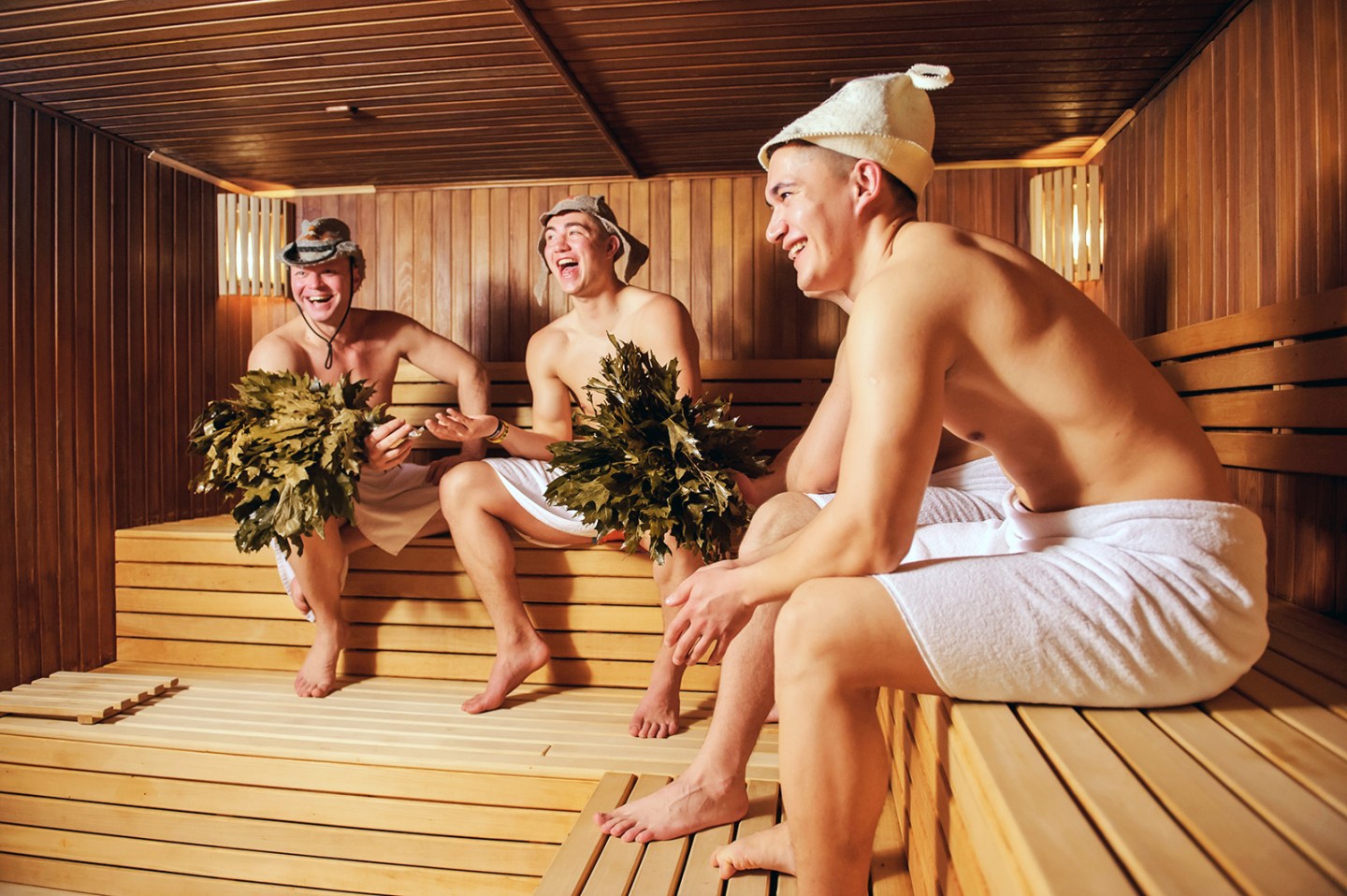
The wooden bench inside a Finnish sauna is a social equalizer in a way that has no precise parallel in other cultural settings. The logic is not romantic; it is structural. In the sauna, everyone is sweating equally. No one's clothing signals status. The heat is the same for the board chairman and the summer intern. The conversation that happens in this context — if any happens at all, because silence is equally acceptable and often preferred — is different from conversation in any other social setting, because the usual markers of hierarchy have been physically removed.
This quality gave the sauna a specific political function in Finnish history. The *sauna diplomacy* practiced in twentieth-century Finnish foreign policy is well documented: President Urho Kekkonen, who navigated Finland's relationship with the Soviet Union during the Cold War with remarkable skill for a small nation bordering a superpower, was known to use his lakeside sauna as a negotiating space — not for formal discussion but for the kind of unguarded exchange between individuals that strips away official positions and allows the actual contours of a relationship to become visible. Kekkonen's sauna diplomacy has been credited, probably with some justification, with maintaining Finnish sovereignty through decades when it was genuinely at risk.
The rule of the Finnish sauna — spoken or unspoken, depending on context — is that sauna is a space of honesty and equality. This does not mean it is a space of intimacy in the casual sense; Finnish sauna culture is not confessional, and the silence it values is not the silence of people waiting to speak. It is the silence of people who are comfortable sharing a space without the social performance that most shared spaces require. The phrase *saunassa ollaan kuin kirkossa* — "in the sauna one behaves as in church" — is heard less often now than it was a generation ago but captures the historical register of the space: not solemn, but serious; not reverent in a specifically religious sense, but aware that something is happening here that deserves to be treated with care.
The Sauna Calendar: From Birth to Burial
Finnish life has historically been organized around the sauna in ways that go considerably beyond weekly hygiene. The smoke sauna's role as the cleanest available space made it the appropriate location for the events that required the most careful environmental conditions: childbirth, treatment of the seriously ill, preparation of the dead for burial. These were not simply practical choices; they reflected a belief that the sauna's spiritual and physical properties made it the right place for life's most significant transitions.
**Christmas Eve sauna** (*joulusauna*) is still practiced in many Finnish households — the last sauna of the year, taken before the family meal, associated with the visit of the sauna spirits who are understood to return on this night. Families who no longer have any particular attachment to the folk belief still often maintain the practice, because it anchors the holiday in physical experience — the specific smell of birch wood and steam and cold air afterward — in a way that creates continuity across generations.
**Midsummer** (*Juhannus*) and the sauna's relationship to water are inseparable. The Finnish midsummer celebration is spent, overwhelmingly, at lakeside cottages where the ritual sequence — sauna, then lake, then sauna, then lake, with food and conversation in between — can continue for hours. The midnight sun means the light never fully leaves, which means the sequence has no natural endpoint except exhaustion. The midsummer sauna is the year's best sauna, Finns will typically tell you, and the reason is the context: the long day, the warm lake, the particular quality of light on water at eleven in the evening, the company of people you do not have to impress.
The **mökkisauna** — the cottage sauna at the lakeside *mökki* that roughly 800,000 Finnish families own — is the sauna that most Finns will identify as the primary one. Not the sauna at the gym, or the apartment building sauna in the city (though both are used regularly), but the one at the lake, fired with wood rather than electricity, probably smaller and less sophisticated than the urban alternatives, and categorically superior in the opinion of everyone who has experienced both. The difference is not technical. It is contextual: the walk to the lake afterward, the specific cold of Finnish lake water at midsummer, the birch trees and the water and the evening light that is the whole point of having a mökki in the first place.
UNESCO Recognition and the Question of Export
In 2020, UNESCO inscribed **the sauna culture of Finland** on its Representative List of Intangible Cultural Heritage of Humanity, specifically highlighting the tradition of *savusauna* and its associated practices. The inscription followed years of Finnish government effort to document and present the tradition in terms the UNESCO framework could recognize — a process that required translating a practice defined primarily by its social and experiential dimensions into the kind of structured descriptive categories that heritage institutions require.
The recognition was welcomed in Finland without particular surprise. Finns have long known that their sauna tradition is culturally significant; they have been explaining it to visitors for as long as there have been visitors. What the UNESCO designation changed was the international visibility of the tradition's specificity — the way it distinguished the Finnish practice from the global sauna trend that has expanded dramatically in the past decade, as cold-water therapy and heat protocols have entered wellness culture.
This distinction matters because the global sauna trend and the Finnish sauna tradition are related but not identical. The wellness industry's sauna — the infrared cabin in the boutique gym, the three-minute "sauna experience" in the airport spa, the Wim Hof protocol incorporating heat-cold cycling as biohacking — captures some of the physiological benefits of Finnish practice while leaving behind almost everything that makes it a cultural institution. It is sauna as personal optimization tool, which is a legitimate category, but it is not the same thing as the savusauna on Midsummer Eve with the birch branches and the cold lake and the specific silence of people who have known each other long enough not to need to speak.
What the Heat Holds
There is a Finnish word — **saunarauha** — that means "sauna peace." It describes the state of post-sauna calm that most regular sauna-goers experience: a quality of physical relaxation and mental quietness that persists for hours after the session, that makes the world seem approximately manageable, and that has no particular English equivalent because the experience it names is not widely distributed enough in English-speaking cultures to have required a word.
The physiological substrate of *saunarauha* is real: the parasympathetic rebound after heat-induced stress, the endorphin release, the reduction in muscle tension and inflammatory markers, the simple fact of having done something that demanded the body's full participation for an hour and now doesn't require anything. But the word holds more than its physiological substrate. It holds the bench and the silence and the company and the lake afterward and the specific smell of birch and steam and the way the light looks when you come out into the cool air. It holds, for the 3.3 million households that have a sauna, the particular quality of belonging that a practice as old as the language itself confers.
Finland is one of the few countries in the world where a visit to someone's home will often include an invitation to the sauna. This is not primarily a wellness offer. It is an offer of the most honest kind of hospitality available in the culture: come into the heat, take off your clothes, sweat next to me in the dark, and we will have shown each other something true. The rest of the conversation — whatever words happen before or after — will be better for it.
The sauna is built first. The house comes after. This is not a practical recommendation. It is a statement about what a home is for, and what kind of knowledge builds one worth having.