Hanbok and Korean Culture – Tradition, Beauty and How to Wear It
Cloth That Thinks: The Hidden Intelligence of Korean Hanbok
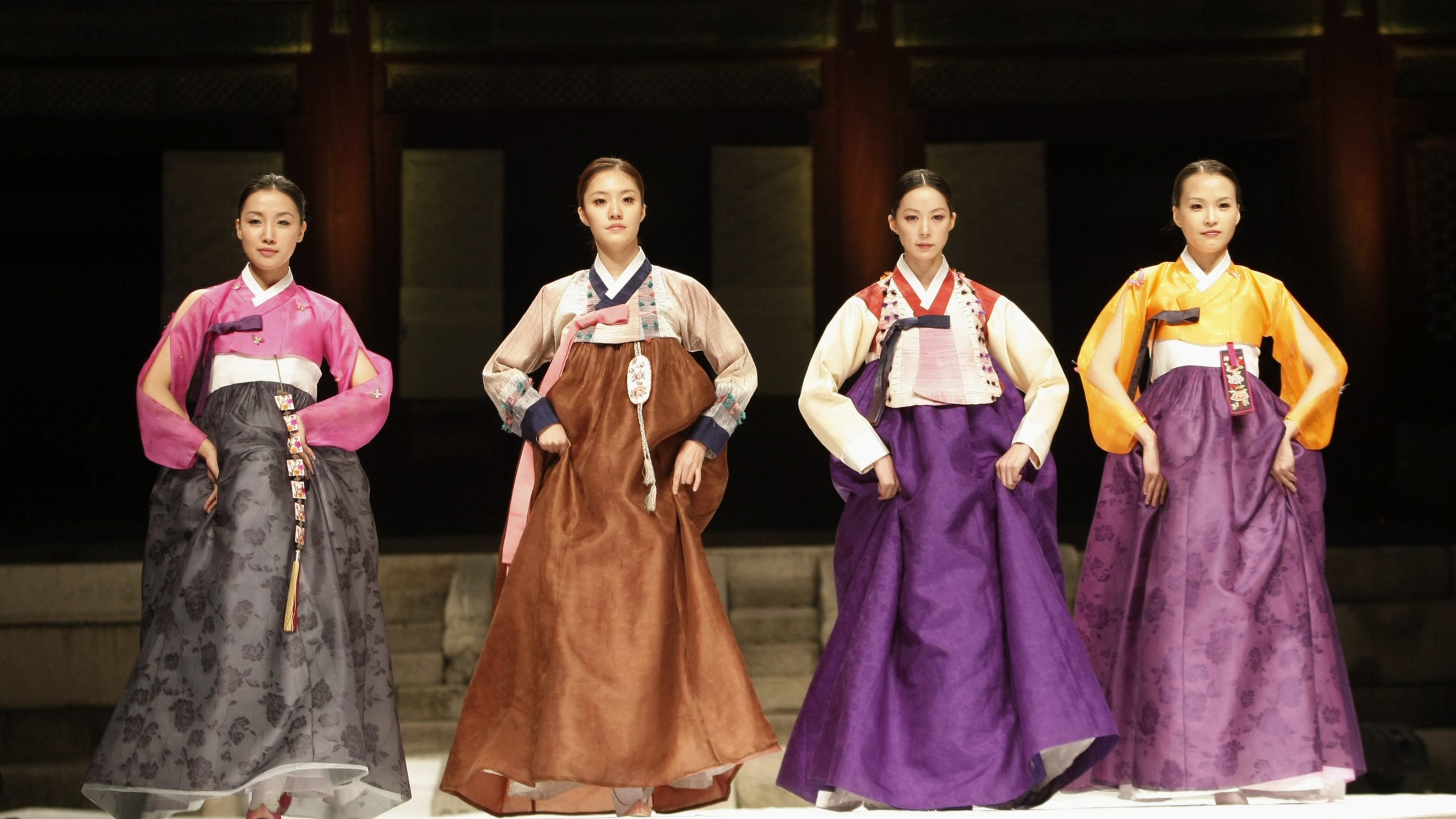
The first thing most people notice about hanbok is the silhouette. The women's version — a short jacket cinched at the chest, a skirt that falls from just below the bust in a wide, continuous bell — is unlike anything in the Western fashion tradition. It creates a shape that is simultaneously modest and dramatic: no waist emphasized, no figure revealed, and yet the effect in motion — particularly when the skirt moves, which is its purpose — is one of the most visually elegant things a dressed human body can do. There is a word in Korean for this: otgoreum, technically the name of the ribbon that ties the jacket, but used more broadly to describe the aesthetic of hanbok in motion — a quality of restrained flow, of dignified movement, of beauty that does not call attention to itself but cannot be ignored.
The silhouette did not appear by accident. It was the result of centuries of deliberate refinement by a culture that had specific, philosophically grounded ideas about what clothing should do — not just to the body, but to the person wearing it, the people watching them, and the social world within which all of them existed.
Understanding hanbok means understanding that Korean traditional clothing was never primarily about aesthetics. It was a social technology.
The Confucian Wardrobe
The hanbok that Koreans wore during the Joseon Dynasty (1392–1897) — the period in which the garment's classic forms were established — was a dress code in the literal sense: a system of visual signals encoding the wearer's position within a hierarchical social world organized around Confucian principles of order, reciprocity, and correct relationship between people of different status.
Color was the primary encoding system. In the Joseon court, sumptuary laws — regulations governing who could wear what — specified with considerable precision which colors, fabrics, and embellishments were available to which ranks. The highest-status garments were dyed with the most expensive pigments: deep scarlet from jaju (cochineal or safflower), brilliant blue from indigo, deep black from gallnuts. Ordinary commoners wore undyed or lightly dyed cloth — the famous Korean baekui (white clothing) tradition, which became so strongly associated with the Korean people that foreign travelers in the 19th century consistently remarked on the "nation in white," is partly a reflection of the fact that bright dye was expensive and largely unavailable to the lower social strata.
The specific colors assigned to hanbok also tracked life stages. Children's hanbok was — and is still — made in the most vivid, multicolored combinations: bright red, green, blue, yellow, orange arranged in horizontal stripes on the sleeves in a pattern called saekdong (literally "color stripes"). The reasoning is explicit within the tradition: children are innocent and full of life, and their clothing should reflect that vitality. A child in saekdong is a visual celebration of the child's existence. As a person aged and took on adult responsibilities, the colors of their clothing were expected to moderate — more subdued, more dignified, more appropriate to a person who now carried weight in the social world.
The white or ivory worn by the elderly — and traditionally associated with widowhood and mourning — completed the arc: a life that began in maximum color and moved, through stages of increasing complexity and responsibility, toward the purity and simplicity of white. The hanbok wardrobe was, in this sense, a autobiography visible to anyone who could read its color grammar.
What the Fabric Knows
The construction of hanbok is built around a principle that distinguishes it from almost all Western clothing traditions: the straight cut. Traditional hanbok is made almost entirely from fabric cut in straight lines, without darts, curved seams, or the complex three-dimensional shaping that Western tailoring uses to fit clothing to the body. The garments are not shaped to the body. They hang from it, drape around it, and create their form through the properties of the fabric and the geometry of the construction rather than through the sculpting of the cloth to a particular figure.
This is not a technical limitation. It is a philosophical choice. The straight-cut construction means that hanbok can be laid flat — which is how it is stored and how it is shown in display — and that it makes no claim about the specific body wearing it. A chima skirt does not reveal whether the woman inside it is thin or heavy, young or old, by appearance alone. This was deliberate: Confucian values around modesty (su, roughly) held that the body should not be displayed as a primary vehicle of personal identity or social appeal. The hanbok conceals the body not to deny it but to redirect attention toward the person as a social and moral being rather than a physical one.
The fabrics used in traditional hanbok are similarly chosen for properties that extend beyond appearance. Ramie — a bast fiber from the Chinese nettle plant, woven into a fabric called moshi — was the preferred summer material for its extraordinary ability to allow air circulation while maintaining its structure: a moshi garment feels cool against the skin even in Korea's humid summer heat because the fiber does not retain warmth. Silk (myeongju) for formal and high-status wear. Cotton for everyday use. Each fabric behaves differently in motion, and the way a woman's chima moves as she walks — the weight and swish of silk versus the crisper movement of cotton — was part of the sensory language of hanbok, communicable to anyone with the cultural literacy to read it.
The Ceremony Within the Garment
Hanbok is most visibly present in Korean life at moments of threshold — the passages between life stages that Confucian culture identifies as requiring formal acknowledgment. The baek-il (hundredth day after birth) and doljanchi (first birthday) celebrations dress infants in vivid saekdong. The gwallye and gyerye — the coming-of-age ceremonies for boys and girls that the Joseon Dynasty formalized and that are currently being revived in modified form — mark the transition to adult status with specific changes in dress. Weddings involve the most elaborate and color-coded hanbok of a lifetime: the bride in red and blue (the colors of eum and yang, the Korean equivalent of yin and yang, signifying the balance of complementary forces being united), the groom in blue and red in reverse.
The Chuseok and Seollal holidays — the autumn harvest festival and the lunar new year — bring hanbok out of closets across Korea in a practice that has survived industrialization, urbanization, and the near-total penetration of Western dress into everyday Korean life. The donning of hanbok on these days is not merely nostalgic. It is a practice of deliberate cultural anchoring: a way of marking that this day is different from ordinary time, that the household is in connection with something larger than daily routine — with ancestors, with the agricultural calendar that the holidays encode, with the chain of generations who wore similar clothing on these same days.
The ancestral rite jesa — the ceremony performed for deceased family members on their death anniversaries and on major holidays — requires hanbok of specific, subdued colors, and the descendants' proper performance of the ceremony in appropriate dress is understood as an expression of filial piety (hyo), one of the cardinal virtues of Confucian ethics. The clothing is not decoration for the ceremony. It is part of the ceremony's meaning.
The Hands That Made It
Traditional hanbok production was a skilled female domestic craft, and the quality of the work was — like Samburu beadwork, like Ainu textile art — both a personal accomplishment and a public statement about a household's cultural standing. The dyeing, cutting, stitching, and finishing of a formal hanbok piece was work requiring years of accumulated knowledge: how to achieve an even color across a bolt of ramie using natural dyes that are inherently variable, how to starch the chima to give it the precise degree of body that produces the correct silhouette when worn, how to apply the decorative embroidery (su) that marked ceremonial garments with patterns of flowers, birds, and auspicious symbols in silk thread.
The embroidery on high-status hanbok was its own specialized art. Subokkang — the embroidered pouches, hairpins, and ceremonial accessories that accompanied formal hanbok — were produced as expressions of love, status, and artistic skill simultaneously. A bride's trousseau of embroidered hanbok accessories, prepared by the women of her household over years of anticipation, was as much a demonstration of her family's refinement as a practical provision for her married life. The crane (hak), a symbol of longevity; the peony (modan), a symbol of wealth and feminine beauty; the bat (bakji), whose Korean pronunciation approximates the word for luck — these motifs appeared in combinations governed by their symbolic grammar, not by pure aesthetic preference.
Much of this knowledge was disrupted by the Japanese colonial period (1910–1945), during which Korean cultural practices including traditional dress were suppressed, and by the rapid industrialization and Westernization of South Korea in the postwar decades. The craft skills required to produce traditional hanbok from scratch — natural dyeing, ramie weaving, proper construction and starching — are now held by a small number of master craftspeople, many of whom have been designated Intangible Cultural Heritage practitioners by the South Korean government and are supported by state funds specifically to maintain and transmit their knowledge.
Hallyu and the Hanbok Question
The global spread of Korean popular culture — Hallyu, the Korean Wave — has created a level of international interest in hanbok that the garment has probably never experienced at any previous point in its history. Korean historical dramas (sageuk), which routinely feature elaborate Joseon-era hanbok, have been watched by hundreds of millions of people across Asia and increasingly worldwide. The scenes of palace intrigue in Jewel in the Palace or Mr. Sunshine are inseparable from their visual texture of layered silk in precise color combinations, and the aesthetic has traveled with the dramas into the wardrobes and imaginations of viewers who may know nothing else about Korean history.
The tourist experience of wearing hanbok — available at rental shops clustered around Gyeongbokgung and Changdeokgung palaces in Seoul, where visitors choose from hundreds of styles and wander the palace grounds in historical dress — has become one of Seoul's most popular visitor activities. The photographs taken in these settings, widely shared on social media, have created a feedback loop between the visual appeal of hanbok and its global visibility.
This is partly wonderful and raises real questions simultaneously. The hanbok available for tourist rental is, necessarily, simplified and standardized — the fabric is not the hand-woven ramie of the original, the dyes are synthetic, the construction is faster and more uniform. What is transmitted in this encounter is the silhouette and the color, not the philosophical framework, the ceremonial significance, the social grammar, or the decades of craft knowledge embedded in a properly made piece. This is not a reason to criticize the rental shops, which serve a genuine function and give many people their only point of contact with Korean material culture. It is a reason to want the contact to go deeper — to create the curiosity that leads from a palace photograph to the question of what the garment actually means and who made it possible.
Korean designers have been working for decades on the question of how hanbok's principles can be active in contemporary life rather than preserved behind museum glass. Designers like Lee Young Hee, who has shown hanbok-influenced collections in Paris since the 1990s, and Lee Hye-soon, a master craftsperson who has dedicated her career to preserving traditional dyeing and weaving techniques, represent two different but complementary responses: the first reaching forward into international fashion conversation, the second reaching back to the knowledge that makes the reaching forward meaningful.
The Cloth That Carries Time
There is a Korean concept, nunchi — a kind of social attunement, the ability to read a room, to sense what is called for in a given moment — that hanbok embodies in material form. The garment has always known what the occasion requires. It dresses a child in maximum color and an elder in white. It brings the ancestors into the room on festival days. It turns a couple's wedding into a visible statement about the balance of complementary forces. It marks rank without naming it, status without announcing it, stage of life without explanation.
To wear hanbok correctly is not to follow a costume manual. It is to step into a semiotic system that has been refined over six centuries — to become, briefly, a legible text within a tradition that knows how to read you. The otgoreum ribbon is tied. The chima falls into its bell. The person inside the garment is the same person they were before, but they are wearing time.
Korean culture survived occupation, war, division, and the most rapid economic transformation in modern history. Hanbok survived with it — changed, contested, simplified in some contexts and painstakingly preserved in others, exported in photographs and drama costumes and palace-ground selfies to people who cannot yet read its grammar. But surviving, which it has always done. Carrying what it carries, which is considerable.
The cloth thinks. It has been thinking for a very long time.