Dancing with the Dead: Madagascar's Famadihana and the Tradition That Refuses to Separate the Living from Their Ancestors
Dancing with the Dead: Madagascar's Famadihana and the Tradition That Refuses to Separate the Living from Their Ancestors
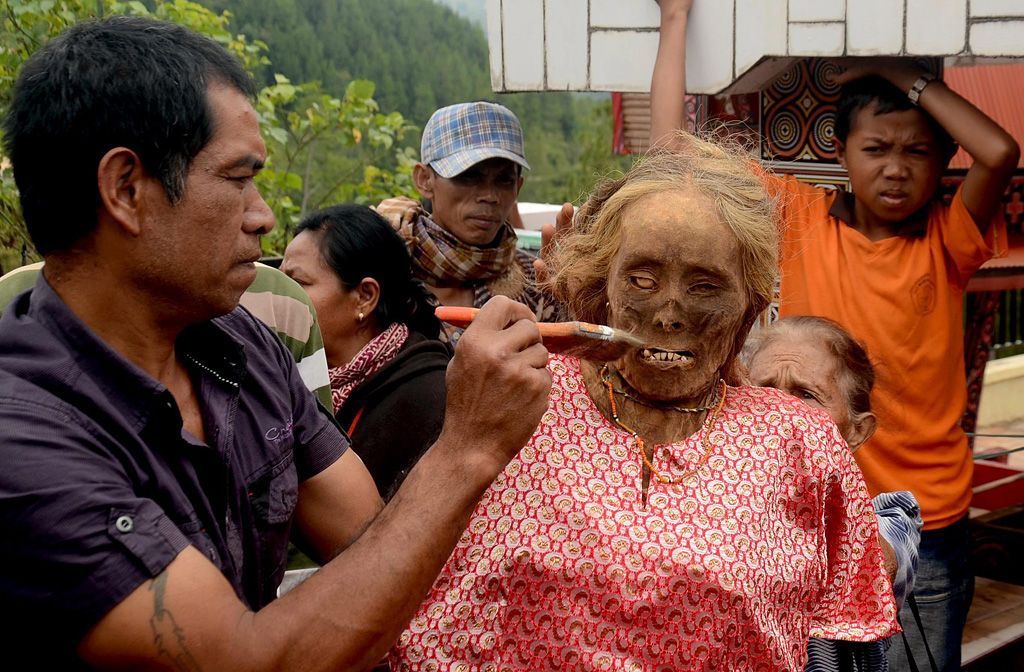
Imagine being invited to a party where the guests of honor have been dead for fifteen years. The invitation is genuine. The food is abundant. The music is live and the dancing is real. The guests of honor are brought out of their tomb, rewrapped in fresh silk by their living family members who tell them the news from the past few years, introduce them to children born since the last gathering, and dance with them — literally carrying the shrouded forms in the arms and on the shoulders of their descendants while musicians play at full volume and the living family celebrates around them. At the end of the evening, the ancestors are returned to the tomb, now in fresh silk, the tomb sealed again until the next ceremony some years hence.
This is **Famadihana** — the "turning of the bones" ceremony practiced by the Merina and Betsileo peoples of Madagascar's central highlands — and it is one of the most profound and most fundamentally misread cultural practices in the world. The misreading is predictable: to an observer formed by Western and most Eastern attitudes toward death, the exhumation of human remains for a festive family occasion is disturbing in a way that makes the ceremony seem macabre, even grotesque. This reading gets the ceremony almost entirely backward. Famadihana is not a confrontation with death. It is a refusal to accept that death constitutes the kind of separation that it represents in most other cultural frameworks. It is, at its most honest description, a family reunion that includes all the members of the family, living and dead, because in the Malagasy understanding of what a family is, the dead members never fully left.
The Razana: Ancestors as Active Participants in the Living World
To understand Famadihana, you must first understand the Malagasy concept of **razana** — ancestors — and what ancestors are understood to be and to do in Malagasy spiritual cosmology. The razana are not simply the honored dead in the sense of people remembered with respect and affection. They are active, present, powerful forces in the world of the living — capable of blessing or withholding blessing, of protecting or exposing to harm, of communicating their wishes through dreams, illness, and the signs that experienced family members know how to read.
The Malagasy traditional worldview, common across the central highland cultures that practice Famadihana, understands death not as a final departure but as a transition to a different form of presence. The razana who have been buried in the family tomb continue to inhabit a realm adjacent to and interacting with the world of the living. They require attention, communication, and care — not as a pious obligation toward the past but as a practical necessity of a family life that includes them as ongoing participants. A family that neglects its ancestors will find their blessings withdrawn; unexplained misfortune, illness, or agricultural failure may be diagnosed by traditional practitioners as the consequence of neglected ancestral relationships that must be repaired through appropriate ceremony.
This understanding of the dead as active participants in family and community life places Famadihana within a much broader category of human religious and social practice — the maintenance of relationships with the dead through material, ritual, and communicative acts — that appears in many cultures worldwide. The Japanese tradition of Obon, the Mexican Día de los Muertos, the Chinese Qingming festival, and numerous African ancestral veneration traditions all reflect similar understandings of the dead as continuing presences whose relationship with the living requires ongoing maintenance. What makes Famadihana distinctive is the directness and physicality of the maintenance it requires: the ancestors are not simply invoked at a distance through prayer or food offerings at a shrine. They are physically brought out, physically rewrapped, and physically incorporated into the family celebration.
The Tomb: Architecture of Permanence in an Impermanent World
The central physical element of the Famadihana tradition is the family tomb — the **fasana** or **kibory** — which in the Malagasy highland tradition is built to a standard of durability and permanence that often far exceeds the standard applied to the houses of the living. This investment priority is not an accident. It reflects the cosmological understanding that the living occupy temporary structures whose inhabitants will eventually join the permanent residents of the tomb, and that the tomb's structural quality is therefore the more important architectural investment.
Malagasy family tombs in the central highlands are substantial structures: typically built from stone or concrete (replacing the earlier use of cut stone blocks), with sealed stone slabs over the burial chambers that can be opened for the addition of new family members and closed again when Famadihana is complete. They are built on family land and remain the property of the extended family across generations — a physical anchor of family identity and territorial claim that persists regardless of the movements of the living family members. Malagasy who have migrated to cities or to other countries maintain connections to their family's ancestral tombs as a form of identity rooting that has no equivalent in most mobile modern societies.
The cost of tomb construction in Malagasy highland communities is significant — often exceeding the cost of a year's agricultural income for an average family — and families save for years to build or renovate the family tomb. This is not considered an extravagance. It is among the most important investments a family makes, because the quality of the tomb reflects the family's respect for its ancestors and its seriousness about maintaining the ancestral relationships that bless the living family's ventures. A family with a fine tomb and a poorly maintained house is a family with correct priorities, in the Malagasy highland value system, and will be understood as such by their community.
The Ceremony: What Famadihana Actually Involves
Famadihana is held during the dry winter months (June to September in Madagascar's Southern Hemisphere calendar) when the highland climate is cold and dry — conditions in which the exhumed remains are least likely to be damaged and in which the large gatherings the ceremony requires are most comfortable. The ceremony is organized by the living members of the extended family, often involving complex coordination among relatives scattered across the country, and is funded collectively by the family — the cost of fresh silk shrouding fabric (*lamba mena*, literally "red cloth," though the color today varies) and the food, music, and other ceremonial expenses are shared according to each family member's means and their obligation to the collective.
The ceremony begins with the preparation of the family compound and the gathering of family members from their various locations. The scale of the gathering reflects the scale of the family: a large extended family's Famadihana may involve hundreds of people, while a smaller family's ceremony may be a more intimate occasion of dozens. Both are equally valid expressions of the same practice — the size of the ceremony reflects the family's size, not the ceremony's importance.
The tomb is opened with specific ritual protocols — prayers and addresses to the ancestors by the family's most senior members or by a traditional specialist (*mpanandro*, a practitioner of Malagasy astrology and traditional ritual knowledge), who asks the ancestors' permission for the opening and explains to them the purpose of the ceremony. The ancestors are addressed directly, as fully communicating individuals who need to be informed about what is happening and why — not as silent recipients of a ceremony performed around them but as participants whose consent and understanding the ceremony requires.
The remains — in their previous shrouding fabric, which has been in the tomb for some years — are carefully removed and brought into the gathering space. The family members who approach the remains do so with expressions that observers consistently describe not as fear or horror but as the particular emotional complexity of reunion: grief and love combined, the recognition of absence and presence simultaneously. The remains are spoken to, addressed by name, informed of family developments (a grandchild born, a marriage contracted, a business started or failed, a family member who has also died and will now join them in the tomb). The communication is not performed or symbolic; it is functionally serious, understood as reaching the ancestor who is listening.
The fresh *lamba mena* is then wrapped around the remains — multiple layers of the fine silk cloth that represents the family's investment in their ancestor's comfort and dignity. The wrapping is done by family members, often including children who are learning the practice by participation, and it is both a practical act (the new cloth preserves the remains) and a ceremonial act of care (the ancestor is being dressed by their loving family). The cost of the lamba mena — silk cloth of the quality required for Famadihana can represent a substantial expense — is understood as a genuine gift to the ancestor, not a symbolic gesture.
When the wrapping is complete, the dancing begins. This is the element that most startles outside observers and that most directly expresses the ceremony's underlying meaning: family members lift the wrapped remains onto their shoulders and dance with them to the live music — typically a brass band or traditional instruments — that the family has hired for the occasion. The dancing is joyful rather than solemn. Children dance alongside adults. Multiple generations of a family share the physical contact with their wrapped ancestor that the ceremony provides. The music is celebratory. The atmosphere, by multiple accounts of observers and participants, is more like a wedding or a harvest festival than any Western conception of funerary ceremony.
The dance is not disrespectful. It is the highest expression of what Famadihana communicates about the relationship between the living and the dead: that death does not end the physical, embodied quality of the family relationship, that the dead can still be held, still be danced with, still be brought into the physical celebration of family life. The separation that death imposes is acknowledged — the ancestors are returned to the tomb, not kept in the house — but the separation is understood as partial and permeable rather than absolute.
The Silk, the Music, and the Food: What the Ceremony Provides
The material elements of Famadihana — the fresh silk wrapping, the live music, the abundant food — are not decorative supplements to the ceremony's spiritual core. They are the ceremony's spiritual core, expressed in material form.
The **lamba mena** (silk wrapping cloth) is the family's most significant material gift to the ancestor. Malagasy silk — produced from the cocoons of endemic Malagasy wild silkworms (*Borocera madagascariensis*) as well as from commercially bred silkworms — has a specific cultural weight in highland Malagasy culture that imported fabrics do not carry. Traditional Malagasy silk weaving (*lamba akotifahana*) is itself a significant cultural tradition, and the use of silk for Famadihana wrapping connects the ceremony to this weaving tradition. The color, quality, and quantity of silk wrapping provided to an ancestor is a statement about the family's prosperity and about the care they have for their dead — and it is understood as genuinely reaching the ancestor, not merely representing their care.
The **music** that accompanies the dancing — traditionally played on instruments including the *sodina* (end-blown flute), *valiha* (tube zither), and *marovany* (box zither), and in contemporary Famadihana increasingly by brass bands or amplified ensembles — is not background ambience. In the Malagasy understanding of ancestral ceremony, the ancestors enjoy music and their enjoyment of it is part of what the ceremony provides them. Playing good music for the dead is an act of hospitality analogous to preparing good food for a living guest: it makes the occasion pleasurable for all participants, living and dead.
The **food** provided at Famadihana — typically a substantial feast for all the living participants, with specific food offerings placed at the tomb for the ancestors — reflects the same logic. The ceremony is a family gathering, and family gatherings in Malagasy culture are marked by collective eating. The ancestors are included in the feast through their specific offerings and through the understanding that the family's abundance — the food they can provide — is itself a product of ancestral blessing that the ceremony acknowledges and reciprocates.
The Astrologer's Role: Timing as Cosmic Alignment
Famadihana ceremonies are not held spontaneously or at arbitrary times. The timing is determined by the **mpanandro** — the traditional Malagasy astrologer-diviner who uses the Malagasy system of lunar astrology to determine the auspicious timing for major family ceremonies. The mpanandro's role is not confined to Famadihana; they advise on the timing of marriages, house-building, agricultural activities, and other significant family undertakings. But their role in Famadihana is especially critical because the ceremony's success is understood to depend not only on the intentions and preparations of the living family but on the cosmic alignment of the timing.
The Malagasy system of astrology — called **vintana**, which refers to the destiny or fate associated with specific times — divides the year and the day into periods of varying auspiciousness for specific activities. Opening a family tomb during an inauspicious period could anger the ancestors or invite harm to the living family members; holding the ceremony during an auspicious period aligns the family's action with favorable cosmic conditions and maximizes the blessings available from the ancestral contact.
The mpanandro's determination of the correct timing for a specific family's Famadihana involves an assessment of the family's specific ancestral relationships, the most recent communications from the ancestors (through dreams or signs), the Malagasy calendar's auspicious periods, and the practical constraints of when the extended family can gather. The process is a consultation rather than a simple prescription — the mpanandro works with the family's specific situation rather than applying a universal schedule — and the relationship between a family and their trusted mpanandro is typically long-term and involves the mpanandro's accumulated knowledge of the family's history and ancestral relationships.
The Malagasy Context: An Island of Convergent Heritage
Understanding Famadihana requires understanding the remarkable cultural context from which it emerged: Madagascar itself, an island whose human settlement history is as unusual as its biodiversity.
Madagascar was not permanently settled by humans until approximately 1,500 to 2,000 years ago — making it one of the last large landmasses on earth to be inhabited by *Homo sapiens*. The people who settled it came from two primary sources whose geographic distance from each other makes their meeting in Madagascar one of history's most extraordinary cultural fusions: **Austronesian peoples** from the Indonesian archipelago (whose presence is reflected in the Malagasy language, a member of the Austronesian language family most closely related to the Maanyan language of southern Borneo) and **Bantu-speaking peoples** from the East African mainland. The result is a population with genetic, linguistic, and cultural roots in both Southeast Asia and sub-Saharan Africa, merged on an island 1,600 kilometers off the East African coast.
Ancestral veneration practices similar to Famadihana appear in both Austronesian and Bantu cultural traditions, which suggests that the Malagasy tradition may have roots in cultural practices brought independently by both groups of settlers and reinforced by their convergence. The specific form that Famadihana takes — with its emphasis on the physical rewrapping of remains, the tomb as permanent family home, and the joyful celebration of ancestral contact — is distinctively Malagasy, but its underlying logic connects to cultural traditions on two different continents.
The Merina kingdom, which unified much of Madagascar under a single Malagasy monarchy in the early nineteenth century, formalized and elaborated Famadihana practices in ways that gave the ceremony some of its current standardized form. The Merina court's investment in elaborate royal tombs and ancestral ceremonies established a cultural template that subsequently influenced highland Malagasy culture more broadly, and the specific elements of Famadihana that are most standardized — the silk wrapping, the family gathering, the music and dancing — reflect this Merina cultural influence.
Famadihana Under Pressure: Christianity, Disease, and the Economics of the Dead
Famadihana is under pressure from multiple directions in contemporary Madagascar, and the tradition's future is more uncertain than its visual richness and cultural depth might suggest.
The most significant pressure comes from **Christian missionary influence**, particularly from the evangelical and fundamentalist Protestant churches that have grown rapidly in Madagascar over the past three decades and that often teach that ancestral veneration practices are incompatible with Christian faith. Malagasy Christians who belong to these communities face genuine theological conflict about Famadihana: the traditional Malagasy understanding of the ancestors as active, communicating presences who require ceremony and gifts conflicts directly with Protestant theology's rejection of communication with the dead as a form of the occult. Families that have converted to evangelical Christianity sometimes decline to participate in the family's Famadihana, creating divisions within extended families that the ceremony was designed to unite.
The mainstream Lutheran and Catholic churches in Mad.