Ainu Culture (Aynu Puri) – The Indigenous Heritage of Japan
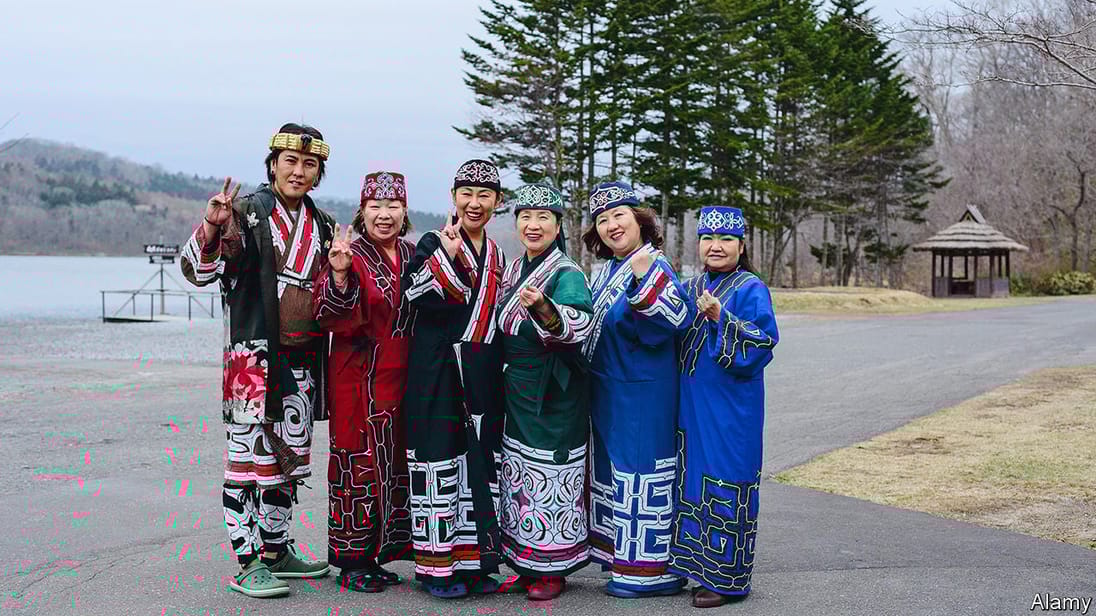
The People Japan Tried to Forget: The Long Survival of Aynu Puri
In 2019, the Japanese parliament passed a law formally recognizing the Ainu as "an indigenous people with a distinct culture and customs." It was a landmark moment — and it came 150 years too late.
For a century and a half, the Japanese state had pursued a policy toward the Ainu that bore an uncomfortable resemblance to the assimilation campaigns waged against indigenous peoples in Australia, Canada, and the United States: prohibit the language, ban the ceremonies, mandate attendance at Japanese-language schools, redistribute the land, and wait for the culture to dissolve into the majority. The Ainu were legally classified not as a distinct people but simply as Japanese citizens — a designation that erased their specificity while offering them none of the protections that specificity might have warranted.
That the culture survived at all is the story worth telling. That it survived with its deepest spiritual architecture largely intact is something closer to a miracle. And that it is now in the middle of a contested, complicated, and genuinely uncertain revival is where the story actually stands today.
Who the Ainu Are and Where They Came From
The Ainu are the indigenous inhabitants of Hokkaido — Japan's northernmost main island — and historically of the Sakhalin and Kuril Islands to the north, territories that are now divided between Japan and Russia. Genetic and archaeological evidence suggests the Ainu descended from the Jōmon people, the prehistoric inhabitants of the Japanese archipelago who arrived perhaps 15,000 years ago and who were distinct in ancestry, language, and culture from the Yayoi people who migrated from the Asian mainland roughly 2,300 years ago and became the dominant ancestors of most modern Japanese.
The Ainu language is a language isolate — meaning it has no known relatives anywhere on earth, no demonstrated connection to Japanese, to any Siberian language, to any Pacific language family. It emerged, apparently, from the specific crucible of Hokkaido and the surrounding islands, shaped by thousands of years of the particular environment and social world that produced the people who spoke it. When a language isolate dies — and the Ainu language came extremely close to dying in the 20th century — it takes with it cognitive and conceptual structures for understanding the world that cannot be reconstructed from any other source. A language isolate is not a dialect. It is a unique solution to the problem of how to organize human experience into communicable form, and there is only one of it.
At the peak of their historical range, the Ainu occupied not just Hokkaido and the Kurils but the southern tip of Kamchatka and possibly parts of the Japanese main island of Honshu. They were maritime people as well as forest people — skilled in ocean fishing for salmon and sea mammals, in river fishing, in the hunting of deer and bear in the dense forests that covered Hokkaido before Japanese agricultural expansion. Their material culture was sophisticated, their trade networks extensive, their political structures organized around the kotan — the village community — as the primary unit of belonging.
Kamuy: A Theology of Reciprocity
The spiritual system of the Ainu — which the word Aynu Puri, meaning literally "the way humans live," encompasses as its deepest layer — is organized around the concept of kamuy: beings of the divine or spirit realm who take physical form in the world and interact with humans in relationships of reciprocal obligation.
The word is often translated as "god" or "spirit," but neither translation is adequate. Kamuy are not remote creator-figures observing the world from a distance. They are present in it, inhabiting the bodies of animals, plants, rivers, fires, diseases, thunder, and the tools that humans make and use. When an Ainu hunter kills a bear, he is not killing a bear. He is receiving the gift of a kamuy who has chosen to visit the human world in bear form, bringing meat, fur, and bone as gifts, and who will return to the divine realm — kamuy mosir — when the ceremony is properly conducted. If the ceremony is not properly conducted, the kamuy will not return, or will return angry, or will warn other kamuy not to visit the human world in this community's territory.
This theology is not metaphor. It is a practical framework for managing human relationships with a natural world on which survival depends. The bear ceremonies — iyomante, the bear sending — in which a bear cub raised within the community for one to two years is ritually killed, its spirit dispatched to the divine realm with gifts and prayers, and its meat shared in a community feast, are frequently cited by outsiders as the most dramatic and to Western sensibilities most troubling expression of Ainu spiritual practice. The cub is raised with genuine affection, treated as a member of the household, and then killed. The contradiction is only apparent: within the Ainu framework, the killing is not a betrayal but the completion of the kamuy's purpose in visiting, and the care given to the cub during its life is part of the respect shown to the kamuy it carries.
The iyomante was banned by Japanese authorities in 1955 as cruel to animals. It was the same logic — the application of a majority culture's ethical framework to a minority practice without any engagement with the minority's own reasoning — that had characterized Japanese Ainu policy for a century. The ban was lifted only in 1994.
What Mouths Remember: Yukar and the Oral Archive
The Ainu had no writing system. Everything they knew — their history, their theology, their legal principles, their understanding of the natural world, their genealogies, their humor and their grief — was stored in human memory and transmitted through performance.
The primary vehicle for this transmission was the yukar: heroic epic poems of extraordinary length, recited in a specialized poetic register distinct from everyday speech, performed from memory by skilled reciters who had spent years learning them. A single yukar could take hours to perform. The corpus of yukar traditions documented by scholars in the late 19th and early 20th centuries runs to tens of thousands of lines, covering creation mythology, the stories of culture heroes and kamuy, accounts of historical conflicts and alliances, and detailed descriptions of ceremonial procedure.
The yukar were not entertainment in the modern sense of a leisure activity. They were the Ainu equivalent of a law library, a theological seminary, and a history department combined — the repository of authoritative knowledge that the community consulted to understand how to act, what to believe, and where they came from. The specialist knowledge required to recite them correctly, including the tonal patterns and rhythmic structures that distinguished yukar from ordinary speech, was itself a form of intellectual property, held by specific families and lineages.
The scholar most responsible for preserving the yukar in written form is Bronisław Piłsudski, a Polish political exile who was sent to Sakhalin by Tsarist Russia in the 1880s and spent years there learning Ainu and recording oral literature — including some of the earliest phonographic recordings of indigenous language, made on a wax cylinder phonograph, that still exist anywhere in the world. The recordings preserve voices from the 1890s: Ainu elders performing yukar and ritual songs in a world that was already being dismantled around them, their voices captured in a medium its users barely understood, surviving into the digital archives of the 21st century.
The Geometry of Protection: Ainu Textile Art
The clothing of the Ainu is immediately recognizable by its decoration: geometric patterns in dark blue thread — primarily ainu-mon, the generic term for Ainu pattern — applied to robes of attus (elm bark fiber) or kaparamip (salmon skin leather) in a technique that combines appliqué and embroidery. The patterns are not decorative in the sense of being merely aesthetic. They are, within the Ainu understanding, protective.
The geometric forms — spiraling moreu patterns, angular ramat (spirit-forms), the continuous interlocking lines that border robes at the neck, hem, and sleeve openings — are placed precisely where the garment has openings, because openings are where malevolent spirits might enter the body. The pattern is a ward: a visual barrier placed at the threshold, comprehensible to spirits and therefore effective against them. A robe without its patterns is not an incomplete garment. It is an unprotected body.
The specific patterns of a robe identified the community it came from, the family that made it, and the status of the wearer in ways that other community members could read. Women were the primary textile artists — attus weaving and embroidery were female domains of expertise — and the quality of a woman's work was both a personal accomplishment and a public reflection of her family's cultural fluency. A bride's ceremonial robe, embroidered over years of preparation, encoded her family's patterns alongside her own artistic voice in a synthesis that was unique to her.
The production of attus — harvesting elm bark in specific seasons, processing the fibrous inner bark through a series of steps involving soaking, drying, splitting, and spinning into thread — is a skill that nearly vanished in the 20th century as Japanese cotton cloth became available and the labor-intensive traditional process seemed unnecessary. It is currently being revived by a small number of practitioners, some of whom learned it from the last generation of women who practiced it fluently, and some of whom have reconstructed it from ethnographic documentation — a distinction that matters enormously to those involved.
150 Years of Dismantling
The formal Japanese colonization of Hokkaido — renamed from Ezo, the older Japanese term for the territory — began in earnest in 1869, when the Meiji government established the Kaitakushi, the Hokkaido Colonial Office, with a mandate to develop the northern island as an agricultural and resource frontier. The development of Hokkaido followed a template that would be familiar to anyone who has studied colonial land seizure elsewhere: the Ainu's traditional hunting and fishing territories were reclassified as government land, Japanese settlers were brought in and granted land titles, and the Ainu were restricted to designated areas that shrank over the following decades.
The 1899 Former Aborigines Protection Act — the primary legal framework governing the Ainu for most of the 20th century — is a document worth reading in full for anyone who wishes to understand how progressive-sounding legislation can function as a vehicle for cultural destruction. It provided for the allocation of small agricultural plots to Ainu families, offered some access to education and medical care, and framed all of this as protection. What it actually did was prohibit the traditional practices — hunting deer with poisoned arrows, constructing the salmon weirs that the Ainu had used for centuries — on which the traditional economy depended, while providing agricultural land that many Ainu lacked the knowledge, tools, and social infrastructure to farm successfully. Land not successfully farmed within fifteen years reverted to government ownership.
The language was driven from schools. Children who spoke Ainu in the classroom were punished. The census categorized Ainu simply as Japanese. By the mid-20th century, the number of fluent Ainu speakers had fallen from tens of thousands to a few hundred. By the 1980s, linguists were describing Ainu as critically endangered, with fluent first-language speakers numbering in the dozens.
The Revival and Its Complications
The current Ainu revival is real, and it is complicated. The 2019 recognition law, which followed Japan's 2007 endorsement of the UN Declaration on the Rights of Indigenous Peoples, provided legal and financial support for Ainu cultural activities, established a national museum of Ainu culture — Upopoy, opened in Shiraoi in 2020 — and created mechanisms for funding language education and cultural preservation programs.
The Upopoy museum is impressive in physical terms: a large, architecturally significant facility on the shores of Lake Poroto, with extensive collections, educational programs, and a reconstructed traditional village. It received significant international attention at its opening. It has also received significant criticism from Ainu activists who point out that its construction required the removal of Ainu remains from the graves that held them — remains previously held in university collections for decades of research conducted without community consent — and that the governance of the museum, while it includes Ainu representation, remains substantially controlled by the Japanese state.
The language situation is particularly acute. Ainu is not the kind of endangered language that has a few thousand elderly speakers; it is the kind that has a few dozen. Revitalization programs exist, and there are young people learning Ainu with genuine commitment and skill, but the distance between a language with a handful of native speakers and a language spoken naturally in domestic life across a community is immense. Languages do not revive through classes and textbooks alone. They revive when people have reasons to speak them — socially, economically, emotionally — in everyday contexts. Creating those conditions requires not just teaching the language but rebuilding the community structures within which the language once lived.
This is the work that Ainu activists, educators, and community organizers are doing, under conditions of significant resource constraint, in the shadow of a long history of their work being either ignored or appropriated. The Aynu Puri — the Ainu way of life — is not a museum exhibit or a government program. It is a practice, requiring living people who carry it in their bodies, their mouths, their hands, and who transmit it to others who will do the same.
What the Bear Sends Back
The word ainu in the Ainu language means simply "human being." The people who call themselves Ainu are making, in their name, a claim about what it means to be human — a claim centered on reciprocity with the natural world, on the obligations that come with receiving gifts from kamuy, on the understanding that humanity is not a position of dominance over nature but of membership within it.
This is not an abstract philosophy. It is an operational framework that governed, for thousands of years, how the Ainu managed fisheries, forests, and animal populations in ways that sustained those populations across generations. The salmon runs of Hokkaido's rivers, carefully managed through the Ainu ceremonial and regulatory system, were among the most productive in the North Pacific. After Japanese colonization dismantled that system and introduced industrial fishing and agricultural runoff, the runs collapsed. The ecology of Hokkaido is still recovering.
The kamuy of the rivers are not sending as many fish as they once did. Whether you understand that as a spiritual failure or an ecological one depends on your framework. Either way, the people who knew how to maintain the relationship are still here, still fighting for the right to practice what they know, still teaching the yukar to young people who recite into recording devices and dream of a world where the recitation is common enough not to require documentation.
The bear kamuy comes down from the mountains in the body of an animal, brings gifts, and is sent back with ceremony and gratitude. The send-back is not an ending. It is a promise of return.
The Ainu have been sent back many times. They keep returning.
